Tag Archive: Christian


I was walking to our sons’ school with the youngest son’s football gear stuffed in my backpack. Cyndy was running errands after dropping them off at school. In the waking up atmosphere of sleepy-eyed confusion in which things can slip teenage minds, J.D. had forgotten his gear on the couch. Of course, he had to have it right away. It was a hot and fairly humid day. Which was not conducive to walking long distances on sidewalks with slight, intermittent, shade.

When I am walking, I watch the ground ahead of me – for several reasons. For one thing, I walk quickly which requires watching the terrain. And by watching the ground ahead of me, I am not constantly reminded of how far away my goal is at any given time. I have also found a large number of coins over the years (albeit mostly pennies).

I walk in long strides, setting up a quick rhythm. Inevitably, I set my stride with the aim of missing the cracks in the sidewalk. Lengthening my stride when the situation requires it. At some point the superstition of my youth slips through – bringing to mind the phrase we used to say.

“Step on a crack, break your mother’s back.”

Do I believe it? Not really. Do I avoid the cracks? You betcha – just to be on the safe side. And I will have you know that to this day my mother has not broken her back. A few other things maybe, but not her back. I will also have you know that I do not think my avoiding cracks had a thing to do with it.

Yet, as I was walking to my son’s school, I was avoiding the cracks. Mostly to set up a rhythm in my stride, but avoiding the cracks nonetheless. That got me to thinking – as walking is wont to do – about avoiding cracks and hedging bets.

As a general rule, I can set a rhythm or pace and move quickly along while still avoiding the cracks. As we as Christians can go about our life in the secular world, avoiding the larger, more obvious sins. But then I come across a section of sidewalk – or life – that has begun to show wear, causing a conundrum. There are so many cracks that even a hop-scotch afficionado would have trouble traversing the area.

So which cracks count in the break your mother’s back scenario? If it is a natural part of the sidewalk which was purposefully made that way, is that considered a crack? Is it just the cracks that have developed over time from wear and weather that count? Or do all cracks count, causing the situation to be crucially problematic?

In our Christian lives the question – considering the cracks as sins – is which sins to avoid. Which cracks are actually sins? And which cracks are part of the sidewalk as it was made? When we come to the section with too many cracks to avoid them all, which do we choose not to avoid?

We are human and cannot avoid all sin. And not all the cracks in life’s sidewalk are sins. Some cracks are merely faults in the sidewalk. Fortunately, “step on a crack, break your mother’s back” is just a game. Unfortunately, life is not a game. Even though it might seem that way at one time or another. Some of the cracks we try to cross in life are wider and deeper than we could have imagined.

When we reach those rough spots in life’s sidewalk, we wonder if we took the wrong path – if we are on the wrong sidewalk. We are unsure which cracks to avoid and which cracks are okay to step on. What false idols we have succumbed to and need to avoid, and what we should be embracing more than we are.

During those times of rough spots, when our paths reach too many cracks in the sidewalk and other obstacles, we need to recall what Paul said to the Corinthians. “No testing has overtaken you that is not common to everyone. God is faithful, and he will not let you be tested beyond your strength, but with the testing he will also provide the way out so that you may be able to endure it.” Corinthians 10:13.

As we walk along life’s sidewalk, we need to put our faith in God, and trust the path we take. By the grace of God we make it to the end of the sidewalk.

 Peace be with you.

There is a rooster next door. Which would be insignificant if we lived in the country, but that is not the case. The family thought they were buying a third hen. I am not quite sure how that worked, but I have to assume it is possible. The rooster is apparently not so sure himself that he is, indeed, a rooster. His crowing has not been tremendously loud – though still annoying – but it is also not refined. He almost sounds hoarse.

I do not know whether it is attributed to his lack of experience or his cognitive insufficiency, but this rooster has no idea when he is supposed to crow. While he does crow in the morning, the crowing does not coincide with the rising of the sun. He is also prone to crow at any time of day, particularly if the hens are clucking. He began crowing about 11:30 the other night. Apparently, to this rooster, porch lights, airplane lights, or even lightning bugs resemble the sunrise to our neighboring rooster.

The rooster’s annoying crowing got me to thinking that we all go about our daily lives “crowing” about insensitive drivers, people who will not put their phones on vibrate during meetings or services, those who make us wait for no apparent reason, and the person who looks at us as if it is our fault when we know darn well it certainly is not. At the same time, we pray, and ask for God’s help to get us through some – ultimately at least – minuscule situation. A situation which must appear to God as relatively insignificant as those fleeting incidents that tick us off during the day.

All of us must admit that we know someone who constantly crows. About how good a Christian they are perhaps. About how they do not understand why people do not see things their way. And so on and so forth. Unfortunately, we must also admit that we do some crowing ourselves.

When it occurs to me – often in mid-sentence – that I am crowing on, shall we say, I try to quickly change course. After, that is, finishing the sentence that gave my mouth a bad taste. If I tarried too long over the line, my face goes flush with embarrassment. At least it feels like it does. I can recall times in which it was evident in the look on the listener’s face that I had indeed blushed. Their look also let me know that I had been caught crowing. Which made me want to become part of floor and slide away.

Maybe the rooster’s crowing irritates me because he reminds me how irritating I can be sometimes. Even though I’m not the only one he irritates with his incessant shouting. But when I am walking around the backyard complaining out loud about the people who bothered me throughout the day, I feel my face slowly become flushed. If I could see God’s face, I would see that knowing look. The look that makes me realize the only one I am fooling is myself. I am merely crowing needlessly. It then occurs to me that praying sincerely might be a good idea.

Peace be with you.

Alyce McKensie, Professor of Homiletics at Perkins Theological Seminary at SMU, published a post before Easter entitled “Have You Got Your Ticket” on Patheos.com. With three teenagers and end of the year school and church activities, I was distracted and only recently re-read the post. The lectionary text that week was the Walk to Emmaus in Luke 24:13-35. “… Easter season is a journey that begins with the empty tomb and the Risen Lord. But for some reason I’ve been thinking about journeys and ways we can remember where were headed and why.”

McKensie recalled the well-known story about Albert Einstein’s train trip when he was on the floor looking for his lost ticket. The conductor told him it was okay, he knew who he was, and trusted him. “It’s not a matter of trust,” said Einstein. “If I don’t find that ticket, I have no idea where I’m going!”

Alyce then wrote about receiving an original ticket to the Wesleyan Class Meeting of the Wesleyan-Methodist Society from 1829. How holding the ticket in her hand led her on a mental spiritual journey back to when James Hart (the name on the ticket) was in fellowship and worship with the society and back to the beginning of the Christian church with the Last Supper and the empty tomb. Read the full post here.

While I was reading her post, my mind went in a slightly different direction (as my mind is wont to do) with the example of the ticket. I do not know what the conductor would have done with the ticket when Einstein found it. But I remember having to get my ticket punched when riding on a train – ostensibly to prove the conductor had validated my ticket. Which led me to consider another kind of ticket.

Part of the problem with the decline of churches today is that many Christians live as though they are mentally getting their ticket punched. Not exactly a good example with which to persuade people to come to, or come back to, church. It’s more about having their eternal ticket punched than faithfulness or discipleship.

Went to Communion Sunday – punch. Went to Wednesday night dinner – punch. Church music programs – punch. Holiday worship services – punch. Christmas services and Easter services – double punches at least. As if the totality of one’s good works can bring entrance to heaven.

If St. Peter at the golden gate were the conductor to eternity, when handed the attendance punch card, he might ask: “Where is your mission punch card, your evangelical punch card, your kindness to strangers punch card?” And so on. If the applicant is using the punch card approach, they are going to fall short of the mark of a good and faithful Christian.

Approached with a true and right spirit, attending church services and events are joyful times of worship and fellowship. Worship and fellowship create an impetus for doing good works, not the other way around. The good works come as acts of faith to, in some small way, return the favor for the Lord’s magnanimous gift of grace. We should want to do good works to further our spiritual journey, not to collect points.

“For by grace you have been saved through faith, and this is not your own doing; it is the gift of God – not the result of works, so that no one may boast. For we are what he has made us, created in Christ Jesus for good works, which God prepared beforehand to be our way of life.” Ephesians 2:9,10

Peace be with you.

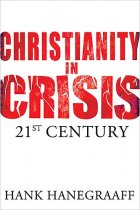
[Re-posted from former blog.] Christianity in Crisis 21st Century, written by Hank Hanegraaff, published by Thomas Nelson, is a book every Christian should have on his or her bookshelf. I wished I had read Hanegraaff’s first book, Christianity in Crisis when it was published in 1993. It would not have changed my views, but would have given me a source to which to turn for proof in my discussions on the subject. I commend Hanegraaff for having the faith and mission to read and listen to these preachers of fallacies and their obvious distortion of God’s word in order to alert the general populace of Christians – many who have themselves been deceived by prosperity and faith healing preachers.

In the 1970’s, after a night of sitting with my jaw on the floor while watching the 700 Club, Pastor Gene Scott, and the like, I wrote a song called Buy One God (Get One Free) portraying the ridiculousness of the prosperity gospel. At the time, I felt alone in my convictions, not even being able to bring the subject up in church. Now I find that I am not alone – thanks to Hanagraaff and others – but the problem has grown much larger and more ingrained in our society and economy.

It is not necessary that I repeat some of his arguments here – he does an excellent job and you must read it for yourself. Although you will be completely repelled and incensed at the audacity of these false preachers – which under other circumstances would leave you feeling lost and praying that it was not so – Hanegraaff points out the fallacies, which offsets the discomfort brought on by their demented interpretation of scripture.

In chapter seven, Back to Basics – as well as the appendixes – Hanegraaff leaves the Christian readers with positive thoughts and theology on their journey through the teachings and theology of these false “prophets.” The reader finishes the book with the comfort of knowing that there are those such as Hank Hanegraaff to point out the false preachers and their fallacies.

Peace be with you.

I was given this book by Thomas Nelson for reviewing purposes. I was not required to write a positive review, nor did I receive any compensation other than the book itself.

The Innovators, a Christian Acappella band, presented a harmonious and spiritual performance in the sanctuary at Christ United Methodist Church, Farmers Branch, on Wednesday, June 1st at 7 p.m. The six young men were visiting Texas from Innercity UMC in Harare, Zimbabwe. Tatenda Sithole, Michael Sithole, Knowledge Radyo, Dzago Chatsama, Marvellas Nhubu, and Leopold Chipatiso filled the sanctuary with their glorious harmonies, illustrating the presence of the Holy Spirit.

In between songs from their CD, such as The Lord’s Prayer and Never Give Up, the men took turns introducing songs and providing background stories. When they decided to bring their musical ministry to the United States, they faced several obstacles. The first obstacle was obtaining visas to leave Zimbabwe, which are difficult to come by. Each attempt required a non-refundable fee of $240 dollars (US). They were denied initially, despite letters of recommendation.

Each time they were denied, they refused to give up. They did not have money, but they had their faith that God is good and their musical talent with which to raise money. In addition to trying to get visas, the Innovators also raise money for their charity which helps to support orphans in Zimbabwe. After several attempts, the Innovators did, indeed, receive one year visas. Then they faced the task of paying for airplane travel to the states. Following many prayers and conversations with Stefany Simmons and others of the Connectional Table, the prayers were answered and the musical group was on their way to Texas.

A few of the songs were sung in the African dialect of Zimbabwe. The audience was told that “you may not understand the words, but you understand the love of God. I don’t know exactly what it means, but I was told the ‘love of God.’” Other songs included a version of Blessed Assurance in both African and English, Thank You, Lord, and Holy Spirit Fill me, Fill Me. Before the conclusion of the concert, the Innovators had the audience dancing in the aisles, singing, sharing praise and welcoming the Holy Spirit.

The tour, which began at Hamilton Prison in Bryan, with shows in College Station, Houston, Dallas, and San Antonio will end with shows in the Corpus Christi area before the group returns to Zimbabwe on June 13th. The congregation of CUMC, along with the love offering taken during the performance, sends their prayers with the Innovators as they continue to use their musical talents to praise the Lord. Thanks be to God for faith as strong as that of the Innovators.

Peace be with you.


Stefany Simmons introduces Innovators

Words and phrases that may have begun as an original thought with an apparent obvious meaning and intent, after constant use, misuse, and abuse, over time become catchphrases and buzzwords with thoroughly ambiguous meanings. Thinking “outside the box” was the hot business concept in the late 1990’s. Through the years, the expression has been bandied about and used in advertisements and press releases to represent ideas and supposed innovations that, in the end, were not so out of the box after all. All anyone succeeded in doing was expanding the box.

“Whatever” was originally used having to do with making a decision. As in “get a Coke or a Dr. Pepper or whatever you want.” Or ” it has to do with Kleenex, napkins, paper towels, or whatever.” Currently the word is most often used to mean “I don’t want to talk about it anymore.” Or a sign of being noncommittal. Our teenagers and their friends use it when they have gotten themselves in a conversational hole and do not want to admit it. “Whatever!”

The phrase “don’t guilt-trip me” gained prominence in the 1960’s with accusations that the “establishment” was trying to lay a guilt-trip on the middle and lower classes. While I sympathized with some of their positions, I disliked the phrase even then. It is more distasteful to me now when my children use it toward me. What the phrase actually means is “I know I’ve screwed up a lot (or owe you a lot), but I don’t want to be told that, I want to get what I want.”

Other variations could be applied, but that is the gist. More often than not, what they refer to as guilt-tripping is actually telling them the truth. For example, one of the boys asks us for something that requires financing from us. When we go down the list of things they have already received no return effort – even though that was the arrangement- we are now required to add “and I’m not trying to guilt-trip you, just telling you the truth.” Beat them to the punch, as it were.

I grew up under the impression that it was easier to keep problems and debts to a minimum rather than endure the bothersome situation of feeling bad. It is our conscience that causes us to feel remorseful. Other people cannot make you feel bad – or guilty – if you have no reason to feel bad in the first place. But most of us feel shame over past indiscretions of one sort or another. In addition to a natural inclination to get defensive when being told we are being selfish. Because, on some level, we are all being selfish. But we would prefer not to admit it or have it made public.

Which led me to wonder if sometimes we do not try to guilt-trip God. As if making a list of our Christian “accomplishments” will persuade God to lend a special hand and eliminate our particular situation. A situation which seems important to us, but in God’s grand scheme of things is quite minuscule. Yet we have the audacity to think that we could have possibly done enough good in our lives to not only outweigh our myriad of failures, but move us higher up on God’s to do list.

“Where are you, God? I go to church every Sunday, well, most every Sunday. I attend Sunday school. I am at the Wednesday dinner s. I read the Bible every day. I pray every night for everyone on my prayer list. I try to be kind to everyone. So why am I stuck in this situation? Why will you not help me?”

God did not put us in the situation we are in – we did. We may not have been the direct cause of our current malady or tragedy, but in some way we had a hand in it. Regardless of whether we were a part of the cause or had little or nothing to do with it, God most certainly was not the cause. Why are we blaming him and ridiculously trying to make God feel sorry for us and give us the outcome we want. We do not want the outcome that God wants or the outcome we may deserve. We want the outcome we think is best.

Just like our teenagers. They do not want to hear the truth. They want to be told they can have things their way. Telling them the truth is guilt-tripping them. We are alongside our children when we ask God for help. We do not want to be guilt-tripped by being told the truth or what is best for us. But we know in our hearts and souls that God wants the best for us. So why are we trying to blame and guilt-trip God?

In trying to guilt-trip God, and when our teenagers try to guilt-trip us, one thing is overlooked. It is, in fact, what is wrong with the term guilt-trip in the first place. It also renders the term irrelevant. And it is quite simply this: you cannot guilt-trip a truly innocent person – or being – as the case may be.

Peace be with you.