Tag Archive: God


Alyce McKensie, Professor of Homiletics at Perkins Theological Seminary at SMU, published a post before Easter entitled “Have You Got Your Ticket” on Patheos.com. With three teenagers and end of the year school and church activities, I was distracted and only recently re-read the post. The lectionary text that week was the Walk to Emmaus in Luke 24:13-35. “… Easter season is a journey that begins with the empty tomb and the Risen Lord. But for some reason I’ve been thinking about journeys and ways we can remember where were headed and why.”

McKensie recalled the well-known story about Albert Einstein’s train trip when he was on the floor looking for his lost ticket. The conductor told him it was okay, he knew who he was, and trusted him. “It’s not a matter of trust,” said Einstein. “If I don’t find that ticket, I have no idea where I’m going!”

Alyce then wrote about receiving an original ticket to the Wesleyan Class Meeting of the Wesleyan-Methodist Society from 1829. How holding the ticket in her hand led her on a mental spiritual journey back to when James Hart (the name on the ticket) was in fellowship and worship with the society and back to the beginning of the Christian church with the Last Supper and the empty tomb. Read the full post here.

While I was reading her post, my mind went in a slightly different direction (as my mind is wont to do) with the example of the ticket. I do not know what the conductor would have done with the ticket when Einstein found it. But I remember having to get my ticket punched when riding on a train – ostensibly to prove the conductor had validated my ticket. Which led me to consider another kind of ticket.

Part of the problem with the decline of churches today is that many Christians live as though they are mentally getting their ticket punched. Not exactly a good example with which to persuade people to come to, or come back to, church. It’s more about having their eternal ticket punched than faithfulness or discipleship.

Went to Communion Sunday – punch. Went to Wednesday night dinner – punch. Church music programs – punch. Holiday worship services – punch. Christmas services and Easter services – double punches at least. As if the totality of one’s good works can bring entrance to heaven.

If St. Peter at the golden gate were the conductor to eternity, when handed the attendance punch card, he might ask: “Where is your mission punch card, your evangelical punch card, your kindness to strangers punch card?” And so on. If the applicant is using the punch card approach, they are going to fall short of the mark of a good and faithful Christian.

Approached with a true and right spirit, attending church services and events are joyful times of worship and fellowship. Worship and fellowship create an impetus for doing good works, not the other way around. The good works come as acts of faith to, in some small way, return the favor for the Lord’s magnanimous gift of grace. We should want to do good works to further our spiritual journey, not to collect points.

“For by grace you have been saved through faith, and this is not your own doing; it is the gift of God – not the result of works, so that no one may boast. For we are what he has made us, created in Christ Jesus for good works, which God prepared beforehand to be our way of life.” Ephesians 2:9,10

Peace be with you.

The Mercedes commercial, in which the driver does not see objects coming, but the car does, is disturbing to me. You know the commercial. “I didn’t notice I was swerving, but my car did.” “I didn’t realize I was nodding off, but my car did.”

On the surface, it is simply a commercial to illustrate some advanced features of Mercedes’ new car. The ability of the car to sense coming obstructions and automatically avoid them. Which is obviously a good thing when it comes to accidental circumstances.

But a viewer could interpret the commercial to mean that it is not necessary to bother paying attention. And many drivers cannot afford to pay any less attention. “I was sending a text to a friend and didn’t see the car in front of me, but my car did.” “I was talking to a friend in the back seat and didn’t know I was swerving into oncoming traffic, but my car did.”

Odd, is it not, that an improvement in an automobile that can potentially prevent accidents and save lives is also a potential excuse for continuing the same activities while driving that cause more accidents and deaths. Sad as it may be, people will use the advanced feature much like they use cruise control – a feature to enable them to do unnecessary things while driving.

Which is much the same with many things. Such as the Bible, the Koran, and other sacred texts. Texts which were written (by whatever means or guidance) to guide people along a path toward spiritual fulfillment. Yet some readers insist on using these texts – in and out of context – to justify their own actions that most assuredly are not spiritual or fulfilling. The very scriptures intended to bring hope, peace, inner tranquility, and spiritual assuredness are distorted to excuse acts of violence, terrorism, and war.

The examples in the Mercedes commercial were appropriate examples to demonstrate the self-correcting feature. The implication of the dialogue was objectionable, but the intent was honorable. The misinterpretation as a result illustrates one of the problems with the human condition. As humans, we have the uncanny ability to take things given to us to with the intention of improving our chance of living through the world we have abused, and use them to further our selfish, lazy endeavors to do what we want, without consideration of others.

Fortunately, by the grace of God, as humans we have the moral capacity to know when we are doing wrong. But as a result of free will, we also have the capacity to make wrong choices and screw up. The key is to succumb to God’s extended arms of grace before falling prey to the temptations constantly before us. To follow the Scriptures as God intended and not as an excuse to satisfy our selfish desires.

“Do nothing from selfish ambition or conceit, but in humility regard others as better than yourselves. Let each of you look not to your own interests, but to the interests of others. Let the same mind be in you that was in Christ Jesus.” Phil. 2:3 (NRSV)

Peace be with you.

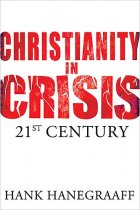
[Re-posted from former blog.] Christianity in Crisis 21st Century, written by Hank Hanegraaff, published by Thomas Nelson, is a book every Christian should have on his or her bookshelf. I wished I had read Hanegraaff’s first book, Christianity in Crisis when it was published in 1993. It would not have changed my views, but would have given me a source to which to turn for proof in my discussions on the subject. I commend Hanegraaff for having the faith and mission to read and listen to these preachers of fallacies and their obvious distortion of God’s word in order to alert the general populace of Christians – many who have themselves been deceived by prosperity and faith healing preachers.

In the 1970’s, after a night of sitting with my jaw on the floor while watching the 700 Club, Pastor Gene Scott, and the like, I wrote a song called Buy One God (Get One Free) portraying the ridiculousness of the prosperity gospel. At the time, I felt alone in my convictions, not even being able to bring the subject up in church. Now I find that I am not alone – thanks to Hanagraaff and others – but the problem has grown much larger and more ingrained in our society and economy.

It is not necessary that I repeat some of his arguments here – he does an excellent job and you must read it for yourself. Although you will be completely repelled and incensed at the audacity of these false preachers – which under other circumstances would leave you feeling lost and praying that it was not so – Hanegraaff points out the fallacies, which offsets the discomfort brought on by their demented interpretation of scripture.

In chapter seven, Back to Basics – as well as the appendixes – Hanegraaff leaves the Christian readers with positive thoughts and theology on their journey through the teachings and theology of these false “prophets.” The reader finishes the book with the comfort of knowing that there are those such as Hank Hanegraaff to point out the false preachers and their fallacies.

Peace be with you.

I was given this book by Thomas Nelson for reviewing purposes. I was not required to write a positive review, nor did I receive any compensation other than the book itself.

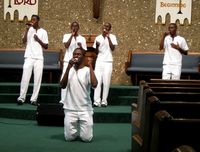
The Innovators, a Christian Acappella band, presented a harmonious and spiritual performance in the sanctuary at Christ United Methodist Church, Farmers Branch, on Wednesday, June 1st at 7 p.m. The six young men were visiting Texas from Innercity UMC in Harare, Zimbabwe. Tatenda Sithole, Michael Sithole, Knowledge Radyo, Dzago Chatsama, Marvellas Nhubu, and Leopold Chipatiso filled the sanctuary with their glorious harmonies, illustrating the presence of the Holy Spirit.

In between songs from their CD, such as The Lord’s Prayer and Never Give Up, the men took turns introducing songs and providing background stories. When they decided to bring their musical ministry to the United States, they faced several obstacles. The first obstacle was obtaining visas to leave Zimbabwe, which are difficult to come by. Each attempt required a non-refundable fee of $240 dollars (US). They were denied initially, despite letters of recommendation.

Each time they were denied, they refused to give up. They did not have money, but they had their faith that God is good and their musical talent with which to raise money. In addition to trying to get visas, the Innovators also raise money for their charity which helps to support orphans in Zimbabwe. After several attempts, the Innovators did, indeed, receive one year visas. Then they faced the task of paying for airplane travel to the states. Following many prayers and conversations with Stefany Simmons and others of the Connectional Table, the prayers were answered and the musical group was on their way to Texas.

A few of the songs were sung in the African dialect of Zimbabwe. The audience was told that “you may not understand the words, but you understand the love of God. I don’t know exactly what it means, but I was told the ‘love of God.’” Other songs included a version of Blessed Assurance in both African and English, Thank You, Lord, and Holy Spirit Fill me, Fill Me. Before the conclusion of the concert, the Innovators had the audience dancing in the aisles, singing, sharing praise and welcoming the Holy Spirit.

The tour, which began at Hamilton Prison in Bryan, with shows in College Station, Houston, Dallas, and San Antonio will end with shows in the Corpus Christi area before the group returns to Zimbabwe on June 13th. The congregation of CUMC, along with the love offering taken during the performance, sends their prayers with the Innovators as they continue to use their musical talents to praise the Lord. Thanks be to God for faith as strong as that of the Innovators.

Peace be with you.


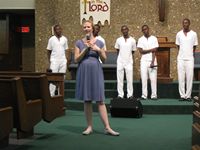
Stefany Simmons introduces Innovators

Beyond Opinion,” edited by Ravi Zacharias and published by Thomas Nelson, is a book for anyone who writes apologetics, enjoys reading apologetics, wants to know what apologetics are all about, or someone who would like to have answers when asked about their faith in everyday life. It is not a book that will be read in one setting. It took me longer to read than most books I review. Fortunately, I found I was not alone, according to reviews by fellow reviewers, Angie Boy and Christian Salafia.

“Beyond Opinion” is a book to be read, re-read, and savored, mentally devouring each delectable morsel – made up of theology and reason. Each of a number of today’s leading apologists, including Zacharias himself, takes on a different aspect or topic of apologetics. Though each chapter stands on it own, it is also a unique part of the cohesive whole.

As is noted in the marketing copy, “Beyond Opinion” is Zacharias’ response to the question posed to him by a Hindu friend. “If this conversion is truly supernatural, why is it not more evident in the lives of so many Christians that I know?” To achieve his objective – an apologetic to enable Christians to be theologically informed enough to answer the tough questions in such a way as to persuade rather than argue – he asked the leading apologists, working with Ravi Zacharias International Ministries (RZIM), to write on the different challenges to the Christian faith.

“Beyond Opinion” is not only a relevant and useful apologetic compendium, it may also be used as a topical apologetic in particular situations. Beginning with the postmodern challenges to the Bible, part one also addresses the other most common challenges such as atheism, youth, Islam, eastern religions, and science. For those wanting to delve further into apologetics and theology in order to be equipped to ” simultaneously defend the faith and be transformed into a person of compassion,” section two of part one digs deeper by addressing conversational apologetics, broader cultural and philosophical challenges, the existential challenges of evil and suffering, and cross-cultural challenges.

Part two seeks to internalize the questions and answers acquired by venturing into the Trinity as a paradigm for Spiritual Transformation, the role of doubt and persecution in spiritual transformation, and idolatry, denial, and self-deception – hearts on pilgrimage. Zacharias rounds out the tome expounding on the church’s role in apologetics and the development of the mind.

Unfortunately, space does not permit in a short review a discussion of the theological points so eloquently stated in the book. And where would one begin? Or end, for that matter. It is better that you read it for yourself in its entirety (albeit not all at once). Your faith will become stronger and you will become spiritually assured. More importantly, the next time you find yourself in a conversation about your faith in a public setting, you will be able to respond knowledgeably and in a manner aimed more toward “winning people rather than arguments.”

Peace be with you.

Max on Life,” the new book by Max Lucado and published by Thomas Nelson consists of the author’s answers to questions he has received over the years in letters, emails, and phone calls. Questions he has been asked as both a pastor and a writer. The letters Lucado received as a pastor are separated by categories (and chapters) entitled Hope, Hurt, Help, Him/Her, Home, Haves/Have-nots, and Hereafter. The questions asked of Lucado range from basic theological questions to marital questions related to God to why go to church. The pastor writes about the role of prayer, the purpose of pain, and the reason for our ultimate hope.

The writing questions are answered in an essay in the addendum, The Write Stuff. The well-written essay deals almost exclusively with writing for the church and as a calling, using the prophets and other authors of the Bible as examples. Lucado deals with basic matters of writing in the last couple of pages. He does not tell an aspiring writer how to be published. But he does tell anyone who feels called to write in the service of the Lord how to proceed from the call, the desire and an idea.

Some readers will read the book cover to cover. Others will use it as a devotional reference or as a topical reference when they are facing hard questions in their own lives. Lucado directly answers most questions with personal experiences and/or Biblical references combined with insights gained from his study, reflection, and prayer. Even answers to questions I will probably (and hopefully) never have still evoked deep feelings, causing me to reflect on my own spiritual journey.

“Max on Life” is an interesting read. Regular readers of Max Lucado will enjoy this book as well as those who are not familiar with his earlier books.

Peace be with you.

Grief and the Presence of God is a Bible study using the book of Job with observations from C.S. Lewis and my own experiences. Originally written for use in a Sunday school, I recently revised it. The study is in three parts, with study questions in the back for each lesson.

Lesson one, Grief and It’s Symptoms, delves into the symptoms and resulting effects of the grieving process. The Book of Job certainly has a lot to say about grief and it’s effects. As I mention in the study, Job is probably the only person in the history of the world – with the exception of Jesus (and he knew what his mission was) – who can truthfully tell someone that they do not know how he feels.

Lesson two, Meanwhile, Where is God?, discusses what is arguably the most destructive symptom of grief – when you think God is not around when you need him. When one is grieving, being told that the departed loved one is in God’s hands is little comfort when one considers that they were in God’s hands even as they were on the road to death. It is even more disconcerting if the death was slow and painful.

Lesson three, Alone into the Alone, is concerned with Lewis’ Cosmic Sadist theory and what I consider to be the myth of closure. Whether you agree or disagree with Lewis’ theory or my own theory of closure, you will come to your own conclusion and perhaps progress further in your spiritual journey. After which you will hopefully be better equipped to face times of grief in the future.

Grief and the Presence of God is available in the bookstore at www.danroark.com.

Peace be with you.

The Communications Conference 2011, presented by UMR Communications, parent company of the United Methodist Reporter, was held at the Presbyterian Ministry Center in Irving on Thursday, February 24th, and Friday, the 25th. The event was previously called the Editor’s Conference – for editors of faith-based publications. Realizing that communicators often wear many hats, the UMR staff changed the title to the Communicators Conference.

The conference opened on Thursday with a luncheon followed by a keynote address by Rev. Tim McLemore, associate director in the Office of Public Affairs at Southern Methodist University’s Perkins School of Theology, that set the tone for the conference. The conference was attended by communicators from the United Methodist Church and other denominations in various areas of the country. Workshops provided tips on organization, communication plans, branding, media choices, photos and Photoshop, volunteer optimization, financing for communications, writing skills, and online tips, tools, and tricks.

Tim McLemore

Presenters from the staff of UMR included Liz Applegate, New Media Associate, Erika Dorsey, Design and Production Manager, Cherrie Graham, Advertising Manager, and Mary Jacobs, Staff Writer. Other presenters included John Greenberger, COO for ReTransform (former CFO of UMR), Samantha Naeyaert, founder of Muddle Management (an organizing and efficiency company), Patrick Steil, owner of ChurchBuzz, and Patrick Shownes, Communications Coordinator for the Arkansas Conference of the United Methodist Church. Steil also gave the closing keynote address, giving attendees online tools they could put into action upon their return home.

As one of the communicators in attendance, representing Christ United Methodist Church in Farmers Branch and the Communications Committee, I can say that the conference was an enjoyable time of fellowship with fellow communicators. The conference is one of the few times some of us get to meet in person. The conference was also a chance share the problems we face as communicators. I’m already looking forward to next year.

See Mallory McCall’s article on the event in the UM Reporter. More pictures below.

Peace be with you.

Sam Hodges and Deb Christian

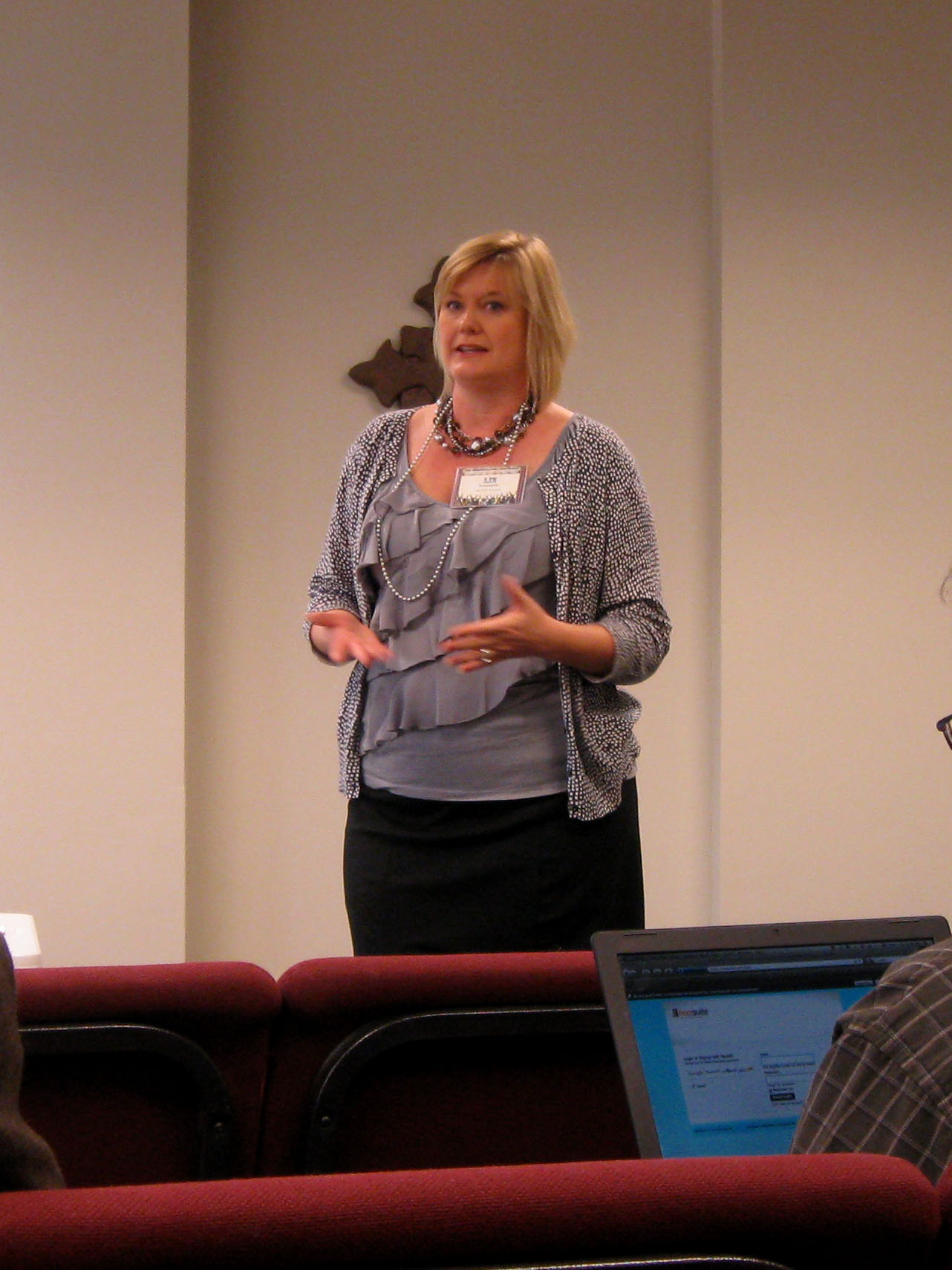
Liz Applegate

Tim McLemore

The King of Glory Lutheran Church’s Dr. Debbie Jacob Life Enrichment Series presents Living a Real Life in a Real World with Dr. Walter Brueggemann on Sunday and Monday, March 6-7. Dr. Brueggemann will preach at all three worship services on Sunday morning. A program on Sunday evening at 7 p.m. and a luncheon at 11:30 a.m. on Monday will round out the event.

A Rest from the Rat Race will be the topic on Sunday evening. Brueggemann will discuss the answer to questions such as: Does our acquisitive culture keep us too anxious to rest? What alternatives do we have to our frantic lives? How can Sabbath keeping help us withdraw from the rat race and refresh our souls? The suggested donation is $5, but due to limited seating, registration is required.

The topic for the luncheon on Monday is Giving In Without Giving Up. Is U.S culture hostile to our living the Gospel? Can faith survive in our militant and materialistic environment? How can we learn to respond intentionally? Registration is $20 and includes luncheon.

Dr. Brueggemann is professor emeritus of Old Testament at Columbia Theological Seminary in Decatur, Georgia, where he taught from 1986 until his retirement in 2003. A respected author and one of the world’s leading theologians, Dr. Brueggemann bridges the Old Testament and contemporary Christian worlds with imagination, scholarship, and a passion for justice and redemption. He is a contributing editor for “Sojourners” and “Christian Century,” he has received honorary degrees and awards from numerous institutions, and is a past president of the Society of Biblical Literature.

Before her death in 2005, Debbie Jacob and her husband, Will, created a program to fund speakers in adult education on topics such as sociology, economics, art, music, and theology. Dr. Brueggemann’s visit is the second in the series. King Of Glory began as a mission church more than 50 years ago and moved to its current site in 1968 so that it might be more visible within the community. King of Glory is a “place where people can grow together in faith and make a difference in the world for Christ.” Its mission is to be and to make growing disciples.

See the King of Glory website for registration, directions, and other information.

Peace be with you.

Who’s Your Neighbor

“Who’s Your Neighbor” was the topic of the January meeting of the Religion Communicators CouncilDallas-Ft. Worth Chapter – held at University Park UMC. I am a member of RCC as a representative of Christ UMC, Farmers Branch, and the Communications Committee. Giving the presentation was Anne Marie Weiss-Armush, president of the DFW International Community Alliance.

The DFW International Community Alliance is a network of over 1600 internationally-focused organizations in the Dallas/Ft. Worth metroplex that embodies the cultural and economic vibrancy of the global community. Their mission is to “build mutual understanding and respect by linking diverse international cultural communities.” The organization not only aligns the diverse groups with one another and the society as a whole, but the members of the groups with themselves. Yahoo groups were formed, such as an African group, to promote community among those living in different areas of the metroplex.

A newsletter is sent out by email each week listing the cultural activities of the many varied ethnic groups. As a new subscriber, I look forward to receiving notice of events in our community and the surrounding area. The subject was quite timely, considering our pastor, Dr. Vic Casad’s recent sermon on the demographics of our community and congregation. While Weiss-Armush praised churches who are reaching out with ESL classes – of which Christ Church is one – there are more opportunities for advancing communication among various ethnic groups with the goal of unifying the community with open exchange of cultural influences.

The Christ Church congregation is a diverse group of individuals and families, as are other faith communities. However, there are other people(s) in our community who are seeking faith, or simply help, on some level, but are unsure where to turn for guidance and assistance. We see them every day at the store, the library, the rec center, and other places.

As part of our mission to share the love of Christ, we need to reach out to other faiths and cultures to move toward a unified community – understanding, appreciating, and celebrating our differences. Sometimes we reject what we do not understand instead of realizing that the ways in which we are actually different are relatively insignificant. As part of our mission as stewards of God’s earth, we must work alongside – and in community with – our multi-faceted neighbors. Which, as the alliance illustrates, is true of any and all faith communities whose end result of mission is to help and serve others.

Do I see opportunities in our community to share the word and be of physical and spiritual assistance? All the time. Do I have opportunities to ask questions and listen to someone about their faith community and how we are alike? Again, all the time. Do I avail myself of every opportunity to be a witness to the love of Christ? Unfortunately, no. But I am praying about it and working on it. How about you?

Peace be with you.