Category: writing


I washed dishes two or three times the other day – I lost count. Which, with a family of five – three of whom are teenagers – is not unusual. I have a love-hate relationship with the task of washing dishes. I do not enjoy the task, per se, but it gives me a chance to think. Not surprisingly, no one seems to bother me when I am at the sink. I wash them by hand and use the dishwasher as a draining board.

Be that as it may, a thought occurred to me while I was washing dishes for what I hoped was the last time. I realized I was washing the same dishes for the third time. The same plates, the same glasses, and the same silverware. Over and over. Time after time. Day after day. So on and so on.

Looking back on my life, there have been quite a few things I thought I might be  remembered for doing. I have also thought about what my purpose in life might be. Yet I never actually considered washing the same dishes day after day for years on end to be my toil in life. True, it is not anywhere close to the only thing I do or have ever done in my life. But do I really want to put it on my resume?

Qohelet would say it does not matter. It is all vanity and a chasing after wind anyway. “This is what I have seen to be good: it is fitting to eat and drink and find enjoyment in all the toil with which one toils under the sun the few days of the life God gives us; for this is our lot.” (Eccl. 5:18 NRSV)

So should I try to find enjoyment in washing the dishes? Derive some pleasure from washing wasted condiments from plates and dried milk from bowls? Receive brief satisfaction from having clean dishes – albeit temporarily?

While it made for interesting thoughts during my dishwashing toil, my consternation at continually washing dishes was causing me to miss the point. The New International Version (NIV) says “satisfaction” in place of enjoyment. The New Living Translation (NLT) says “accept their lot in life.” Which I think might be closer to the point Qohelet was making. ;

In verses 13-15, Qohelet laments the fate of those who hoard wealth and find that they still – through circumstances during life and the finality, and pennilessness, of death, end up with nothing. “All their hard work produces nothing – nothing they can take with them.” In verse 19, he states that “whenever God gives people wealth and riches and enables them to enjoy it, to accept their place in the world and to find pleasure in their hard work – all this is God’s gift.” Concluding the chapter in verse 20, “people shouldn’t brood too much over the days of their lives because God gives an answer in their hearts’ joy.” (CEB)

The answer lies, not in my receiving some weird satisfaction from such mundane tasks such as washing dishes, but in enjoying the life that God gave me. Whether pleasure or toil, I am fortunate to have the opportunity to experience either one. Which is a theme Qohelet returned to more than once.

Earlier in Ecclesiastes, in 3 10-11, Qohelet says that “God has made everything fitting in its time, but has also placed eternity in their hearts, without enabling them to discover what God has done from beginning to end.” He ends the book of Ecclesiastes with “So this is the end of the matter; all has been heard. Worship God and keep God’s commandments because this is what  everyone must do. God will definitely bring every deed to judgment, including every hidden thing, whether good or bad.”

The fact that I am tired of having to wash the dishes – or any other task which I am required to undertake – is inconsequential. Having faith in God, attempting to live Christ-like to the best of  my ability, and enjoying the life I have been blessed with, both good and bad, is what is important. God will take care of the rest.

Peace be with you.
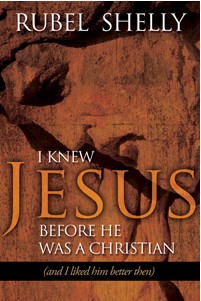
The full title of Rubel Shelly’s book published by Leafwood Publishers (ACU Press) is “I Knew Jesus Before He Was A Christian…and I Liked Him Better Then.” When I was asked to review the book, I was intrigued by the title. As I began to read, it became apparent that the title was not merely cute to boost sales, but was entirely appropriate for the material. Our small group was deciding what book to study next and I suggested this one. Rather than read through it before the group studied it, I waited to review the book in order to include it’s effectiveness for a small group study.

The conclusion is that I Knew Jesus… works well for small groups. Precisely because it compares the original churches to churches now and the Jesus of the Bible to the Jesus nonbelievers perceive to be preached in churches today. The subject is – and should be – on the minds of all church and small group members.

Shelly begins by asserting that we can be both pro-Jesus and pro-church simultaneously. But not as long as a perception exists of disconnect between the two. Changing the perception necessarily requires elimination of the disconnect. The author quotes Stephen King when he wrote, “And while I believe in God, I have no use for organized religion..”

That is what many Christians have heard, unfortunately, far too often. Then there is the oft-quoted “I’m spiritual, but not religious.” In chapter four, Shelly tells the story of author Anne Rice. Rice renounced the Catholic religion at age eighteen. After a series of tragedies, including  the near loss of her life, she renewed her commitment to the Catholic faith. Rice wrote a book about the experience, dedicated herself to “glorifying God,” and launched a series of Christ the Lord books.

On July 28, 2010, Anne Rice posted a statement on her Facebook page that she was giving up Christianity and doing it “in the name of Christ.” She said that she remained committed to Christ as always, but not to being ‘Christian’ or part of Christianity. Rice followed the next day with “my conversion from a pessimistic atheist lost in a world I don’t understand, to an optimistic believer in a universe created and sustained by a loving God is crucial to me. But following Christ does not mean following his followers.”

Which is precisely the point Shelly is making. The Jesus of the Bible – and by extension, of the original churches – is not the Jesus the people of the world see proclaimed by many of today’s churches. We should strive to be more like the Jesus of the Bible than the Jesus we portray through the filter of our organizational structure and polity. Rubel Shelly, in I Knew Jesus…, looks at different aspects of the disconnect and barriers between Jesus and the church. The author challenges and encourages the reader to work toward solutions in their own lives and churches, with questions found in the discussion guide.

Too many people have decided they are done with the church. They do not want to have anything to do with the church. “But you just might get attention with this radical, engaging, challenging, life-transforming, healing, rescuing person named Jesus of Nazareth. In fact, I think it is the only hope we have for communicating with a postmodern world. The best argument is…a living demonstration of kindness and acceptance, grace made incarnate, or love emptying itself for the sake of others.”

In I Knew Jesus Before He was a Christian, Shelly uses real-life and biblical examples to illustrate that while church membership may be declining, there are still souls searching for the life-affirming love of Christ. For a church to be a model of the first Christian churches and the life Christ displayed, they must first exhibit Jesus in the community and participate in ministering to those in need.

Peace be with you.

[I received this book free from Leafwood Publishers for a review. I was not required to write a favorable review.]

Circuit Rider – Poem

Pioneer minister

dressed in Sunday go-to-meeting clothes,

on the back of a strong steed,

traverses the country side.

Residents of the woods

perk up, looking towards the commotion,

disturbing their solitude,

on a country Sunday morning.

Lazy autumn leaves

in silent mid-motion while falling,

feel the Lord’s reigning presence,

in the minister’s passing.

Rifle across saddle

a problematic duality

quiet pen with screaming sword

peace and violent protection.

Sermon in drifting thoughts,

or at least significant scriptures,

interminable miles pass

under knowing, pounding hooves.

Church waits – anticipates

in a grove of tall hickory trees.

salvation starved pioneers

waiting for the word of the Lord.

Business on Saturday,

baptism at water’s edge by candle light

services Sunday morning

minister heads toward his next church.

Pioneer minister

dressed in Sunday go-to-meeting clothes,

on the back of a strong steed,

traverses the country side.

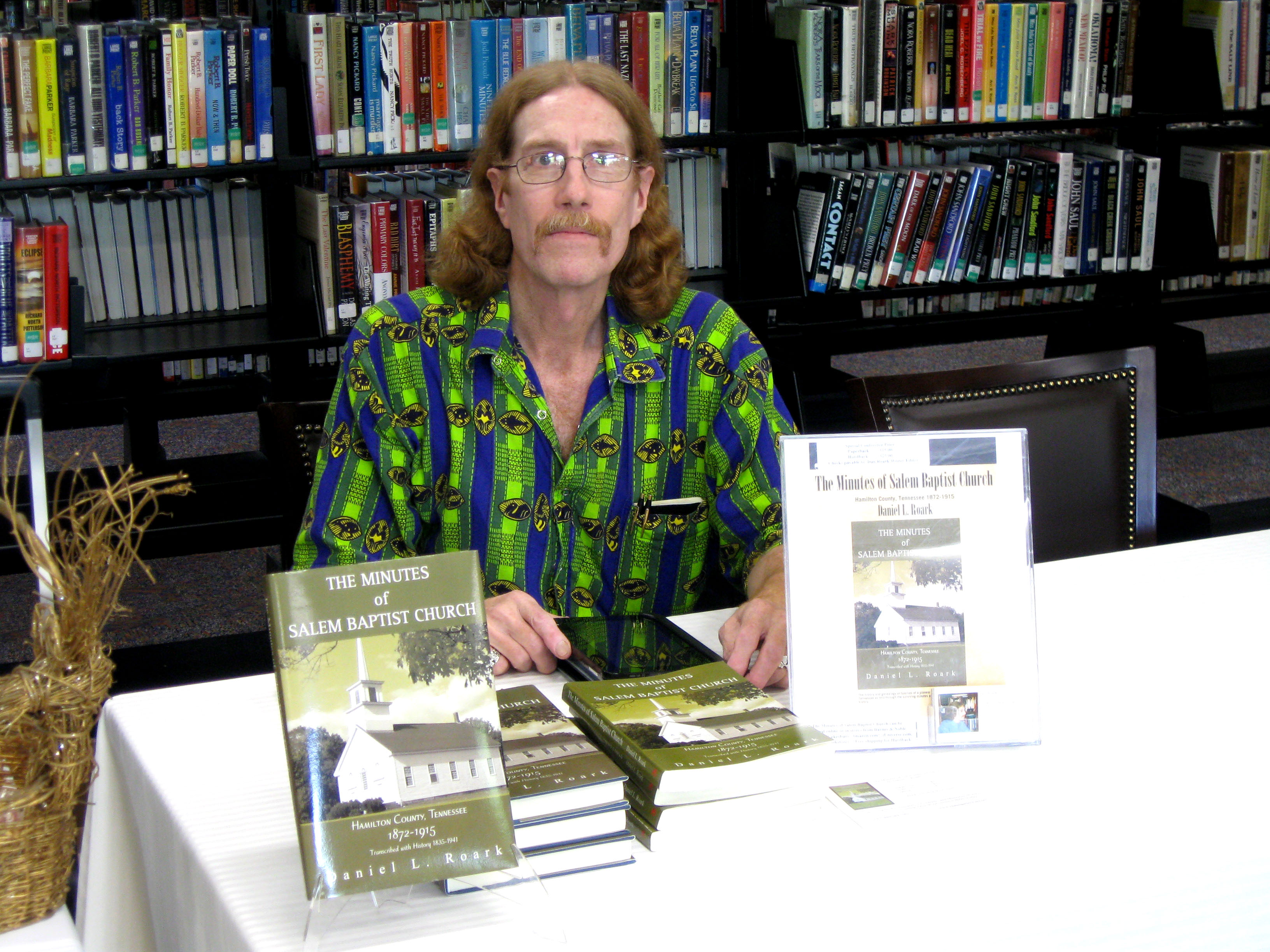
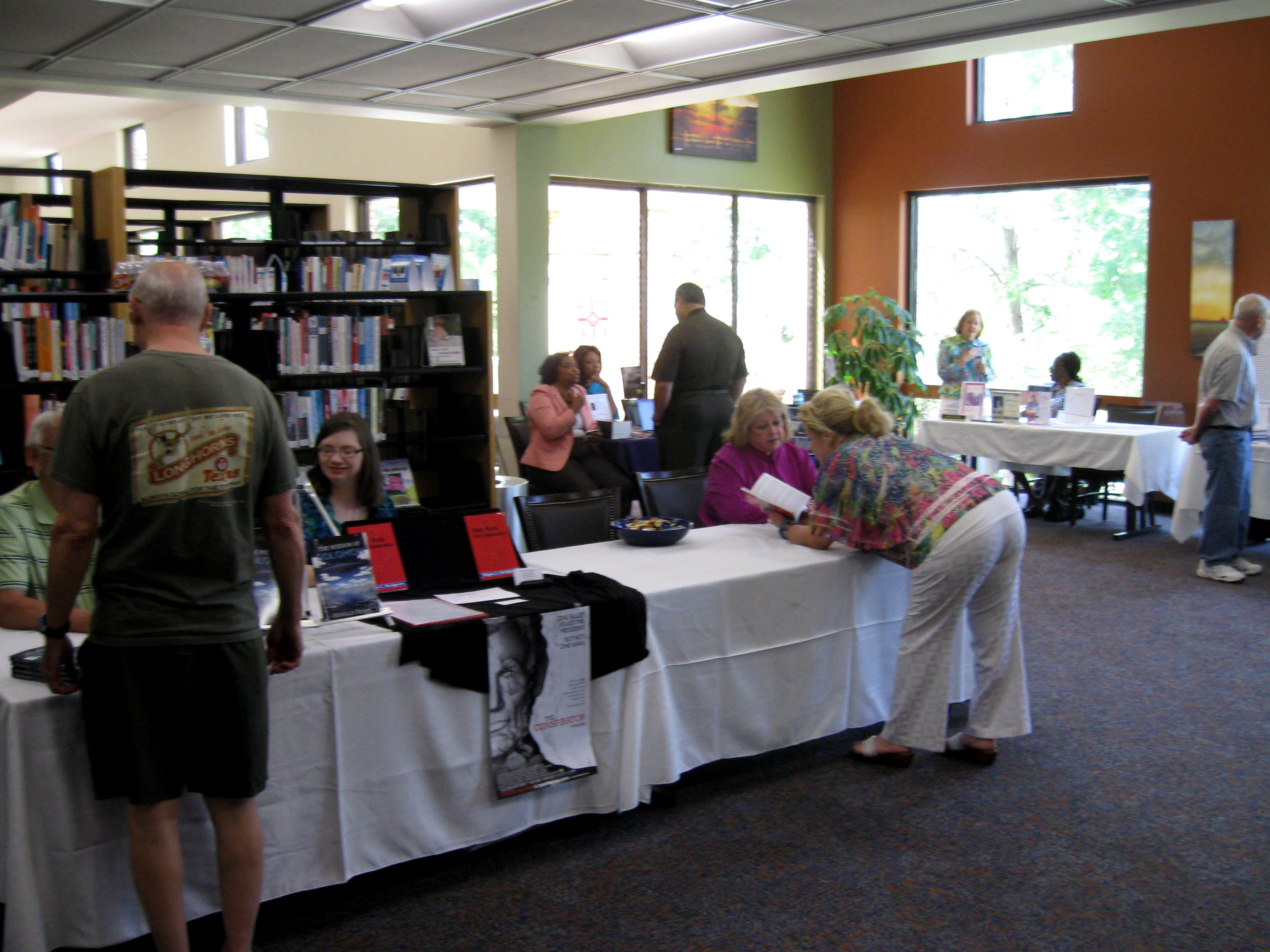
I was fortunate to be included in an authors and illustrators signing at the local library, Manske Library, on Saturday. About 20 local authors and illustrators were present from 3 to 5 p.m. to sell and sign books and meet with the public. Belinda Jacks, Library Director, was very hospitable.

I was there to promote my book, The Minutes of Salem Baptist Church, the story of a pioneer church north of Chattanooga, Tennessee in the 1800s and early 1900s. I was also promoting my upcoming poetry book, Timepieces, Contrasts, and Memories, and other upcoming projects. It is comforting to converse with other members of a profession that is largely a lonely one.

An author signing is an interesting event. Readers have a chance to meet authors and illustrators who have a chance to tell their stories. Illustrators such as Pat Kochan, a professional artist at the Artisan’s Studio-Gallery in Farmers Branch, with her book of watercolor paintings that capture the history of downtown Dallas. The book is titled Once Upon a Time in Dallas.

Authors like Tracey Richardson, originally from New Orleans, with her book, Florestine, telling the story of her ancestor about whom little is known. Taking the known facts and stories, Richardson used fiction to fill in Florestine’s back story. Or Lynette Norris Wilkinson, who grew up in the Ninth Ward in New Orleans. Living in Dallas by the time of Hurricane Katrina, she found herself with 16 family members and friends on her doorstep who had lost everything – except what was in their cars – during the hurricane. Which led her to write the book, UNTOLD: The New Orleans 9th Ward You Never Knew, and create the corresponding website with stories of the survivors. Proceeds from the book benefit New Orleans charities.

Martha Trevino Castilleja talked about her children’s book, The Courage of Little Alex, a story of doing wonders with faith and courage. Castilleja’s other book, Something to Remember, is a story about families surviving the devastating flood of 1954 in Acuna, Mexico, and the bordering town of Del Rio, Texas. In Dr. Grace Allman Burke’s book, The Stranger’s Son, the reader sees what it might have been like to witness the events from the Bible’s book of Exodus through twelve year old Gershom’s eyes. After reading the book, they will have a “whole new appreciation for what it meant to be Moses child.

Stay tuned – as they say – for more authors’ stories.

Peace be with you.

The GUSTO! program at King of Glory Lutheran Church (KoG) will be visiting the Museum of Biblical Arts on Tuesday, May 22nd, at 10 a.m. The program is usually held  on Monday, but the museum is closed on Monday. I visited the museum for a Religion Communicators Council  (RCC)  meeting last year. My comments will be after the following description.

The Museum of Biblical Art, rebuilt after a devastating fire in 2005, is a cultural crossroads using art to promote tolerance and understanding of the humanities and Western culture. The museum today is larger than the original, featuring over 30,000 square feet of expanded art galleries and exhibits. It is located at 7500 Park Lane in Dallas, just west of NorthPark Center.

The museum hosts a broad array of painting and sculpture by premier artists, from Botticelli to John Singer Sargent to Andy Warhol. Its main attraction is a 40-foot wide mural of the Resurrection by internationally known artist Ron DiCianni. There is also an extensive collection of lithographs by Marc Chagall. Other galleries feature Biblical archaeology, Jewish and Israeli art, religious architecture, and African American, Hispanic and contemporary art.

The museum recently acquired a life-size replica of Michelangelo’s “Pietá,” cast in bronze and authorized by the Vatican. It came directly from the Michelangelo Museum in Florence. Another outstanding exhibit is the “Tapestry of the Centuries” mural by Vladimir Gorsky. This monumental painting illustrates the people and events that shaped world history, from the birth of Jesus through 1999 A.D.

The museum is truly fascinating, particularly the exhibits of art from other religions. The  King James Bible exhibit has been extended until June. The exhibit consists of original Bibles from the private collection of Dr. Charles Ryrie. Last year was the 400th anniversary of the King James Bible. I’m looking forward to having time after the tour to properly explore it. The tour does not allow sufficient time to effectively see everything. I was unable to stay after the RCC meeting.

The bus is most likely full at this point, but you can meet at the museum at 9:45 a.m. on Tuesday. Sharon Chapman will collect the $9 admission from each person and pay for the entire group. The tour will conclude with lunch on your own at Northpark Center if you would like. If you plan to meet the group there, e-mail gusto@kingofglory.com or call Sharon Chapman at 214-458-3271. If you do not get a chance to take the tour with the group, be sure to visit the museum on your own when you get the chance. You will not be disappointed.

Peace be with you.

American Protestantism has long been shaped by interactions between religion of the heart and religion of the head. Yet modern evangelicalism is as much a product of post-World War II political developments in the United States and globally as it is of 18th and 19th century revivalism.

So says Dr. Robert Hunt of Southern Methodist University, speaker at the May 14 GUSTO! meeting beginning at 10 a.m. Hunt has been a pastor, missionary, teacher, writer and editor. He currently serves as director of global theological education at the Perkins School of Theology, where he lectures on world religions, Christian missions and Islam. He spoke to GUSTO! on the topic of Islam back in April of 2010.

Contemporary evangelicals are far more diverse and divided than depictions in the media typically show, Dr. Hunt says. Yet the recent alignment of some evangelicals with Roman Catholic social causes has the potential to reshape not just the political landscape, but the very concepts of citizen and state. He will explore these trends at the May meeting.

A Dallas native, Hunt graduated with a degree in history from UT–Austin and earned a master of theology at SMU. He received a Ph.D. in history from the University of Malaya, focusing on the history of Bible translation and Christian–Muslim relations. He lived and worked abroad in the Philippines, Malaysia and Vienna for nearly 20 years before coming to SMU. He has written several books, most recently The Gospel Among the Nations: A Documentary History of Inculturation (Orbis, 2010)

The previous paragraphs are from Kay Champagne of the GUSTO! Communications team. Kay is a fellow member of the DFW chapter of the Religion Communicators Council. The GUSTO! program has some interesting and entertaining speakers. I have written quite a few posts on past programs which are in the archives.

I have met Robert Hunt and heard him speak on several occasions. I took a course he gave on world religions at the Theological School for the Laity at Perkins School of Theology. He gave a sermon at our church and gave a presentation at an RCC meeting held at Perkins. He is an engaging speaker who speaks with humor and acumen. There will be a reception following the presentation. Guests are welcome.

Peace be with you.

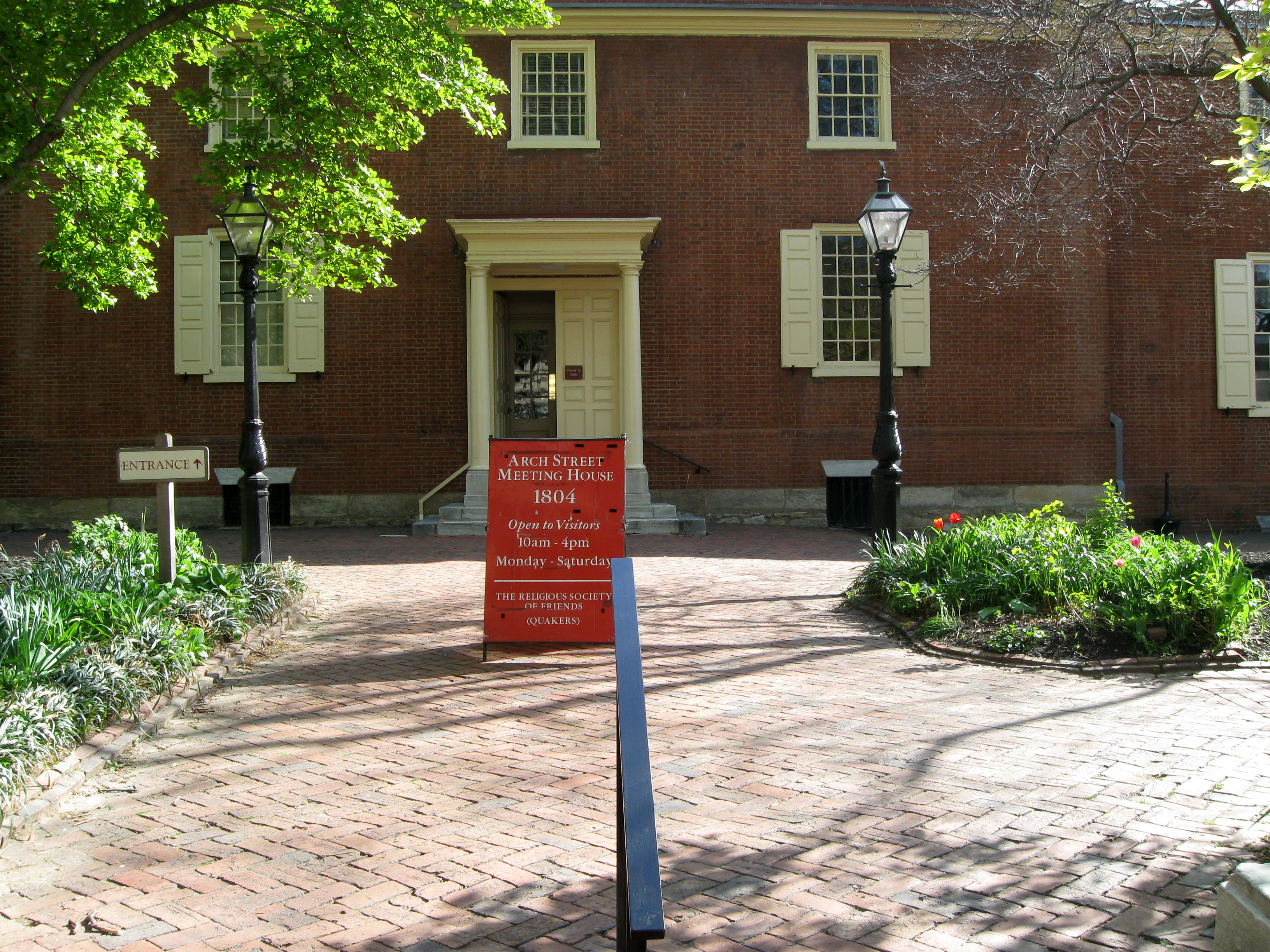
After visiting the National Constitution Center (see previous post), the RCC convention group walked a few blocks over to the Arch Street Friends Meeting House. The land on which the building sits was originally a Quaker cemetery since 1693. The land was set aside by William Penn, founder of Pennsylvania, as a burying ground for members. When a series of yellow fever epidemics necessitated mass burials a hundred years later, the brick walls around the property were erected to protect the graves from “rowdy boys and wandering cows.”

The meeting house was built on top of the graves in the early 1800s. Quaker women lobbied for a structure providing equal meeting space for men’s and women’s business gatherings. The meeting house, with identical meeting rooms, was the world’s largest Quaker meeting house. After men and women began to conduct business together in the 1920s, they began to gather in the west, or woman’s, meeting room.

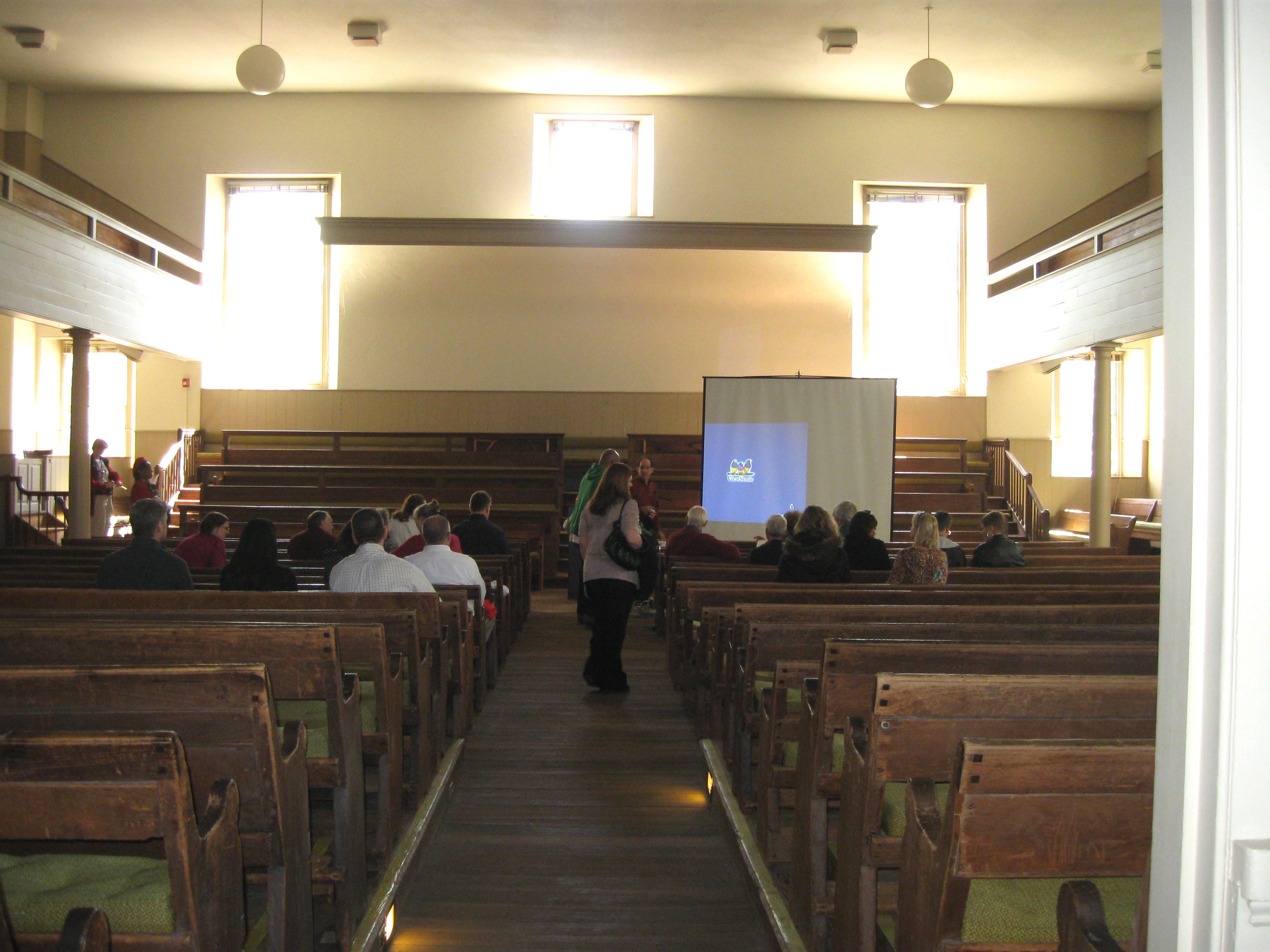
Today, the west room remains unchanged. The east, or men’s meeting room, now serves multiple purposes. For the plenary, we gathered in the west room. As we entered the room, I could imagine the meetings of the past 200 years. The benches had been chiseled and had never seen a single sheet of sandpaper. The souls of all the people who sat their over the years seemed to be present in the hazy air illuminated by the sun through the windows.

Dr. Emma Jones Lapsansky-Werner is emeritus professor of History and Curator of the Quaker Collection at Haverford College. Lapsansky-Werner told the group about William Penn’s utopian vision that led to his design of Philadelphia, the city of brotherly love. In response to a question about utopia today, the professor said that “God lives in public transportation, community parks, markets where people sell their own wares, and schools where parents participate in teaching.” Mary Beth Coudal, who co-led a workshop on social media at the convention, has an interesting post on Lapsansky-Werner’s quote.

Dr. Lapsansky-Werner also mentioned – among other things – an interesting fact about the  earlier Philadelphia map. In focusing on his Philadelphia utopia, Penn had the roads into the city from outlying townships marked “road from (insert town).” The idea being that all roads led to Philadelphia. Penn was introduced to a Quaker missionary when he was fifteen, and became a Quaker at 22.

William Penn never lived to see the fruits of his labors – he died penniless due to shoddy business practices and mistreatment by others. But his democratic principles served as an inspiration for the United States Constitution and he was an early champion of religious freedom. Dr. Lapsansky-Werner gave an entertaining and marvelously informative lecture to the interfaith audience.

The lecture was not only appropriate to an interfaith group with her information on the Quaker community, but also with the story of Penn’s stand for religious freedom. It was also appropriate for the location of its delivery – the Quaker meeting house. To underscore the significance, it was announced during the convention activities on Saturday that the Arch Street Friends Meeting House had received historical designation status the day before.

Peace be with you.

On Friday the 13th, the second day of the RCC convention, we took the train into Philadelphia from the Airport Marriott. After eating lunch at a rather crowded food court, we met at the National Constitution Center. Unfortunately, we only had 45 minutes to an hour to tour the  museum before the special museum program began. I would like to return with Cyndy, if not the rest of the family, to have time to explore the museums and sites of Philadelphia. Much has changed since traveling there with my family when I was a teenager.

I discussed my family’s trip to Pennsylvania in an earlier post. I also mentioned the trip our family took in 2010 from the Rock and Roll Hall of Fame in Cleveland, Ohio, through  Pennsylvania, and down to Washington, D.C. The special exhibit at the Hall of Fame that year was a Bruce Springsteen exhibit. Fast forward to the convention trip to the Constitution Center. I ate most of half of my sandwich (the “real” pastrami – as opposed to the turkey pastrami you get in Dallas – was a welcome treat) and wrapped up the remaining half in my bag.

I wanted to get to the museum in order to have as much time to wander around the museum as possible. It is the 225th anniversary of the signing of the Constitution this year. I was walking through the mall taking pictures when I came close enough to clearly read the banner hanging above the entrance. There was a special exhibit at the time and it was – you guessed it – a Bruce Springsteen exhibit (it was, in fact, the same exhibit).

Now the Rock and Roll Hall of Fame I completely understand, but the National Constitution Center? Come to find out that they had put a different twist on the exhibit and were demonstrating Springsteen’s “use of music as a tool to express his First Amendment Rights.” Which makes sense. But here is the “kicker” as they say. The National Constitution Center is the first and only venue where the Springsteen exhibit is to travel from the Hall of Fame. What are the odds that I would be at both venues at the time of the exhibit?

The museum program, however, entitled “Freedom Rising” was very entertaining. The narrator stood in center of the circular theater swathed in lights and sound, with slides running around the upper part of the theater. The presentation told the story of the beginning of our country and government. Although the presentation was a little louder than absolutely necessary,  the narrator’s voice was uniquely appropriate for the material.

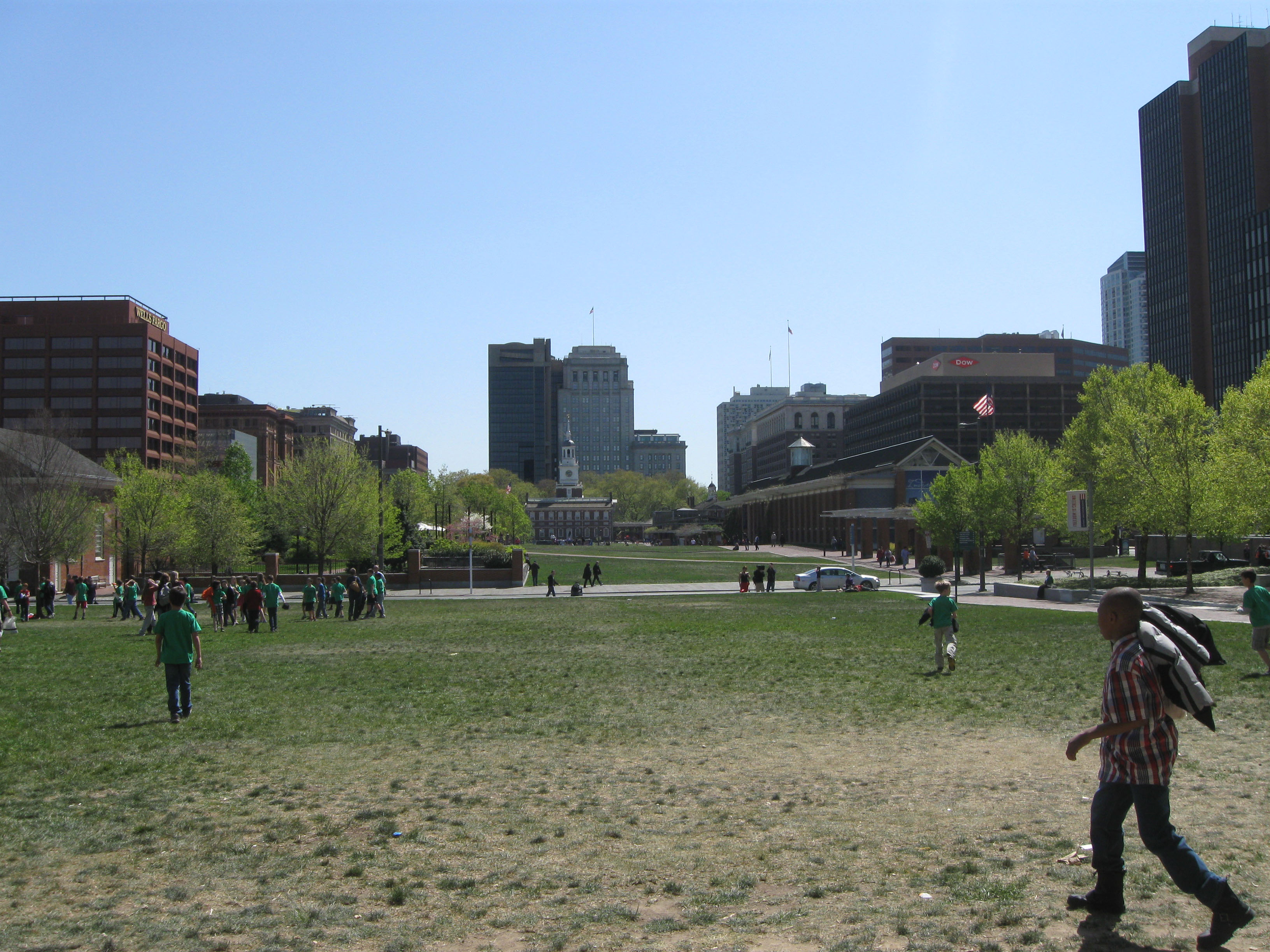
While I had little time to explore the museum, I did discover that the museum is remarkably interactive. Unfortunately, the crowds of school children and families made listening to the recordings difficult and required constant movement – leaving little time to absorb the information. But I certainly plan to make an effort to return and further explore the National Constitution Center and other fine museums in Philadelphia. Independence Hall and the Liberty Bell are a short walk from the NCC.

Back to the odds of my being at both displays of the Bruce Springsteen exhibit. I agree with Albert Einstein that “coincidence is God’s way of remaining anonymous.” But then there is the thought that everything happens for a reason. Sometimes, though, there just does not seem to be a reason.

So I put it to you – what do you think? Is there always a reason behind everything? When there does not seem to be a reason are we simply unable to discern it? Are there such things as coincidences and happenstance occurrences?

Peace be with you.

The full title of the opening plenary of the RCC national convention was “The Interdependence of Faith and Government Working for the Common Good.” The theme of the convention – being in Philadelphia and all – was “Interdependence: Religion Communication Today.” As I stated in my previous post, the plenary was scheduled to begin at 1:30 and I was walking down the stairs from the second floor skybridge to the lobby a few minutes later. Check-in at the hotel was not until 4 p.m., so, backpack and computer bag in hand – and on shoulder – I checked in to the convention and went in for the plenary.

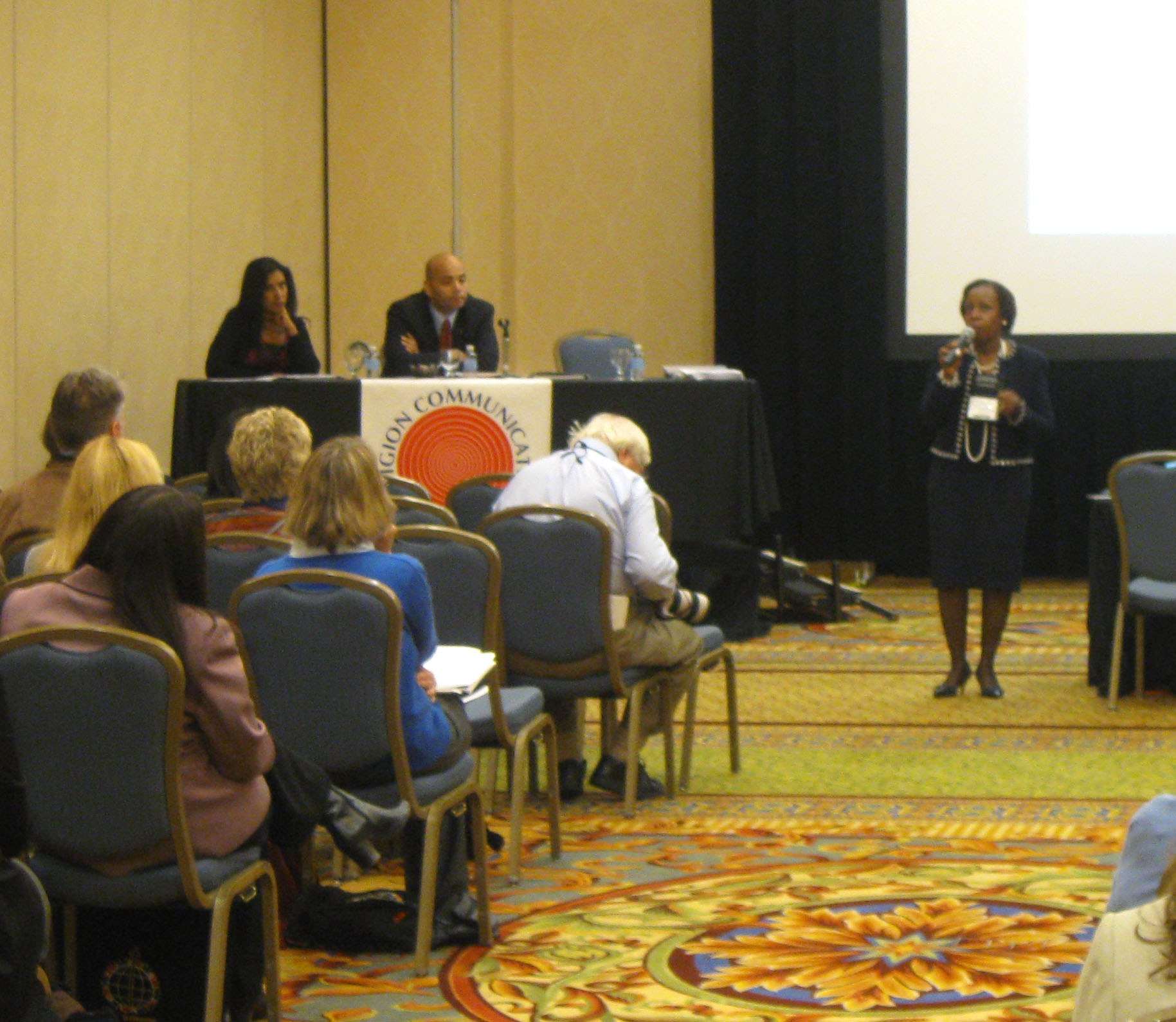
Rev. Brenda Girton-Mitchell, director of the Faith-based and Neighborhood Partnerships Center at the Department of Education, moderated the panel of Directors of FBNP Centers. In addition to her work at the DOE, Girton-Mitchell also started a consulting firm to assist churches and nonprofits in advocacy, leadership development, and conflict resolution. The mission of the Center at the DOE is to promote student achievement by connecting schools and community-based organizations, both secular and faith-based.

The second panelist, Zeenat Rahman, acting director of the Center for Faith Based and Community Initiatives, U.S. Agency for International Development (USAID), is a regular contributor to the Chicago Tribune. She has also appeared in The Washington Post, National Public Radio, and CNN speaking on issues related to Muslim identity, civic engagement, and international affairs. Rahman is a Fellow with the American Muslim Civic Leaders Institute at the University of Southern California.

The third member of the panel was Eugene Schneeberg (rhymes with “neighbor”), director of the Center for FBNP for the U.S. Department of Justice. Under his leadership, the Center works to advance the goals of the President’s National Fatherhood & Mentoring Initiative, assists in the coordination of the National Forum on Youth Violence Prevention and serves on the Federal Interagency Reentry Council. Schneeberg, a graduate of Gordon Conwell Theological Seminary and Boston University, is passionate about his center’s initiatives.

The White House Office of FBNP works with centers at 13 federal agencies to form partnerships between government at all levels and nonprofit organizations, both secular and faith-based, to effectively serve Americans in need. The Center’s primary goals are to: Engage community-based organizations, both secular and faith-based, in building a culture of high expectations and support for education, Develop and support initiatives within the federal government to help maximize the education contributions of community-based organizations, including faith and interfaith organizations, and Strengthen partnerships between community-based organizations and schools to help improve the nation’s lowest-achieving schools.

The three directors were entertaining and informative, displaying their passion for the work their particular center does. Girton-Mitchell told the room of communicators that Directors of FBNP centers would be glad to make appearances similar to the panel discussion for the RCC convention to spread the word about their programs and initiatives if multiple presentations can be arranged to justify the travel expenses – which are limited. Each of the panelists introduced themselves and talked about the initiatives of their particular center, including the links contained in this post.

Peace be with you.

The Religion Communicators Council (RCC) National Convention was held this past Thursday through Saturday in Philadelphia at the Philadelphia Airport Marriot. While there was a showing of the movie, Waging Peace: Muslim and Christian Alternatives, on Wednesday evening for those who arrived early, the convention did not officially begin until the opening plenary at 1:30 on Thursday afternoon on “The In[ter]dependence of Faith and Government.” After the panel discussion, the attendees had a choice of four workshops.

My plane was scheduled to arrive at 1:20, so I knew I would be at least a few minutes late to the plenary. The hotel and the airport were connected by a skybridge just one terminal away from my arrival terminal, which helped, but it was still after 1:30 when I walked down the stairs to the lobby of the hotel. I will get back to the plenary and other convention activities in following posts.

The main event of the day was the DeRose-Hinkhouse Awards Dinner at 6:30 p.m. I am a member of RCC as a writer and representative of Christ UMC (Farmers Branch, Tx) and the communications committee. The church entered an article I had written for the church newspaper, and I entered this blog in the new Social Media category of the awards. When I was  informed that I won, I did not know which of the two was the winning entry. However, since I was winner, the church funded my trip to the convention.

As it turned out, I won a Certificate of Merit for Chasing After Wind. The .pdf of the awards program may be found here. Social Media is a new category, so it is at the end if you  happen to be looking for my award. In the picture you can see the slide they showed when they announced my award. The other picture is of the attendees from the DFW Chapter of the RCC. From left to right: Cherrie Graham (United Methodist Reporter), Debbie Tull (Patheos), myself, and Deb Christian (also UMR). Mary Jacobs, UMR reporter, was preparing for a writing workshop she was leading and was not available for the picture. Debbie and I both needed to catch our flights home.

The judging for the DeRose-Hinkhouse awards was done by “colleagues at Belmont University in Nashville, Tennessee.” All of the entrants received the judges’ evaluation forms after the awards program. Entrants not at the convention received their evaluations by mail.

Be that as it may, the judges had some suggestions for improving the blog. Ironically, my room was in a black hole of the hotel and I could not even boot up my computer – much less access my blog. So there will be changes to Chasing After Wind over the next week or so. Hopefully, the changes will make for a more pleasing visit to the blog, easier to comment, like, follow, and so forth, and there will be more interactive qualities.

Feel free to let me know of any suggestions or comments you may have pertaining to my blog. I try to respond to comments and visitors as soon as possible.

Peace be with you.