Category: Communications


Hotel Room 1bIn the previous post, I was talking about my sabbatical to Marshall that ended up being unlike what I had previously imagined. I checked in to the hotel late Monday night. When I entered the hotel room after checking in at the front desk, I did what I have always done since taking vacations with my parents and my younger brother. Check out every nook and cranny of the room, beginning with the desk and all drawers.

The dresser drawers never had anything in them and they still don’t. Some hotels used to put extra pillows in the bottom drawers of the dresser, but that was years ago. When the desk drawer had hotel stationary. Now the desk does not even have a drawer.

Some things are the same. The book of information about the hotel and surrounding restaurants, shops, etc. A pen, a notepad, survey card, and the usual bathroom items. And the Gideon Bible in the bedside drawer. But when I opened the drawer this time – and found the Bible – the Mormon Bible was next to it. Which was comforting to me – like I said, I was there to quit a bad habit – simply because there is strength in numbers.

But it was also intriguing, because it was a hotel in Marshall, Texas – a town of 24,000 people. As best I could ascertain, there are two Mormon churches in Marshall. I don’t think two churches could afford to supply Bibles to all of the numerous hotels in Marshall. Which raises the question of which hotels and why? But that is a question for another time.

What matters is that the hotel having both a Bible and a Mormon Bible is a step toward understanding our neighbors and living with our differences. Perhaps there will come a day when you check into a hotel and there will be several Bibles or holy books of other religions. More for people of the different faiths who may stay at the hotel than for the proselytization of those faiths. The different holy books would also be available for anyone wanting to learn about other faith traditions.

Which will be a subject we will return to in this blog. One of the main purposes of Chasing After Wind is to write about those times – simple or complicated – in which life and theology intersect. And since I am a member of a few interfaith organizations, another purpose of the blog is to promote dialogue between all religions and faith-based organizations. Join me as we look for God in everyday life, and learn about other faith traditions.

Peace be with you.

American Protestantism has long been shaped by interactions between religion of the heart and religion of the head. Yet modern evangelicalism is as much a product of post-World War II political developments in the United States and globally as it is of 18th and 19th century revivalism.

So says Dr. Robert Hunt of Southern Methodist University, speaker at the May 14 GUSTO! meeting beginning at 10 a.m. Hunt has been a pastor, missionary, teacher, writer and editor. He currently serves as director of global theological education at the Perkins School of Theology, where he lectures on world religions, Christian missions and Islam. He spoke to GUSTO! on the topic of Islam back in April of 2010.

Contemporary evangelicals are far more diverse and divided than depictions in the media typically show, Dr. Hunt says. Yet the recent alignment of some evangelicals with Roman Catholic social causes has the potential to reshape not just the political landscape, but the very concepts of citizen and state. He will explore these trends at the May meeting.

A Dallas native, Hunt graduated with a degree in history from UT–Austin and earned a master of theology at SMU. He received a Ph.D. in history from the University of Malaya, focusing on the history of Bible translation and Christian–Muslim relations. He lived and worked abroad in the Philippines, Malaysia and Vienna for nearly 20 years before coming to SMU. He has written several books, most recently The Gospel Among the Nations: A Documentary History of Inculturation (Orbis, 2010)

The previous paragraphs are from Kay Champagne of the GUSTO! Communications team. Kay is a fellow member of the DFW chapter of the Religion Communicators Council. The GUSTO! program has some interesting and entertaining speakers. I have written quite a few posts on past programs which are in the archives.

I have met Robert Hunt and heard him speak on several occasions. I took a course he gave on world religions at the Theological School for the Laity at Perkins School of Theology. He gave a sermon at our church and gave a presentation at an RCC meeting held at Perkins. He is an engaging speaker who speaks with humor and acumen. There will be a reception following the presentation. Guests are welcome.

Peace be with you.

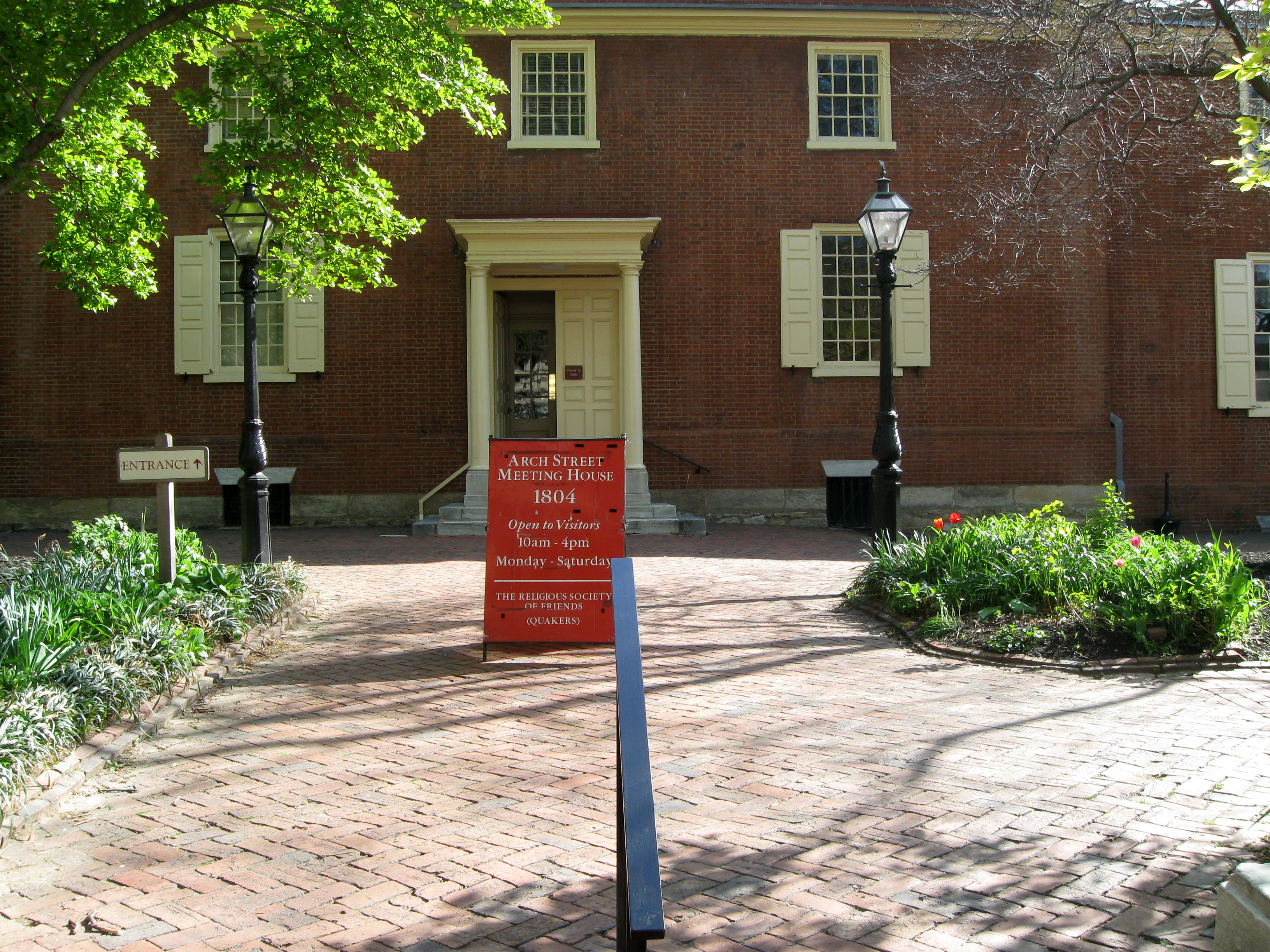
After visiting the National Constitution Center (see previous post), the RCC convention group walked a few blocks over to the Arch Street Friends Meeting House. The land on which the building sits was originally a Quaker cemetery since 1693. The land was set aside by William Penn, founder of Pennsylvania, as a burying ground for members. When a series of yellow fever epidemics necessitated mass burials a hundred years later, the brick walls around the property were erected to protect the graves from “rowdy boys and wandering cows.”

The meeting house was built on top of the graves in the early 1800s. Quaker women lobbied for a structure providing equal meeting space for men’s and women’s business gatherings. The meeting house, with identical meeting rooms, was the world’s largest Quaker meeting house. After men and women began to conduct business together in the 1920s, they began to gather in the west, or woman’s, meeting room.

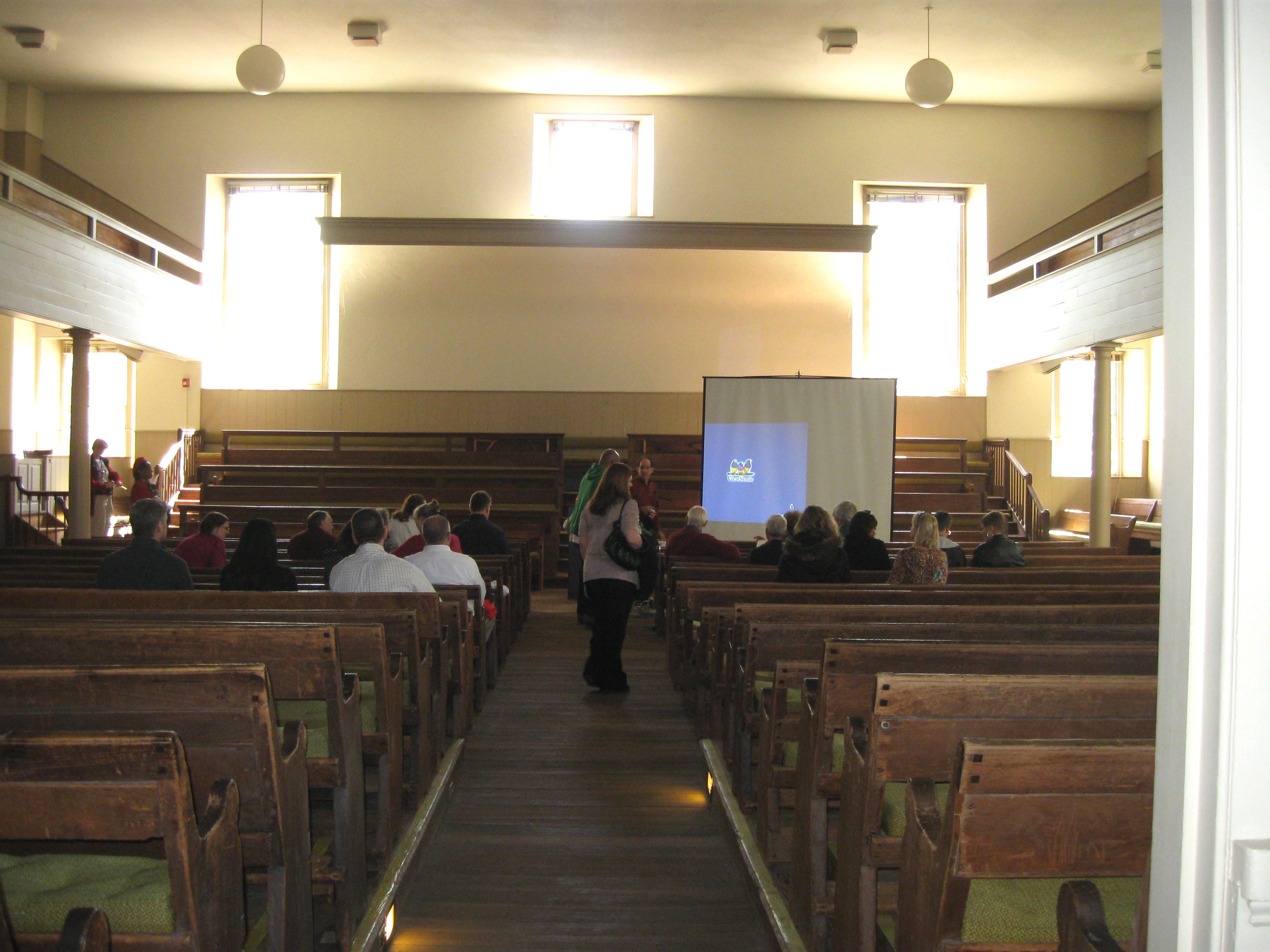
Today, the west room remains unchanged. The east, or men’s meeting room, now serves multiple purposes. For the plenary, we gathered in the west room. As we entered the room, I could imagine the meetings of the past 200 years. The benches had been chiseled and had never seen a single sheet of sandpaper. The souls of all the people who sat their over the years seemed to be present in the hazy air illuminated by the sun through the windows.

Dr. Emma Jones Lapsansky-Werner is emeritus professor of History and Curator of the Quaker Collection at Haverford College. Lapsansky-Werner told the group about William Penn’s utopian vision that led to his design of Philadelphia, the city of brotherly love. In response to a question about utopia today, the professor said that “God lives in public transportation, community parks, markets where people sell their own wares, and schools where parents participate in teaching.” Mary Beth Coudal, who co-led a workshop on social media at the convention, has an interesting post on Lapsansky-Werner’s quote.

Dr. Lapsansky-Werner also mentioned – among other things – an interesting fact about the  earlier Philadelphia map. In focusing on his Philadelphia utopia, Penn had the roads into the city from outlying townships marked “road from (insert town).” The idea being that all roads led to Philadelphia. Penn was introduced to a Quaker missionary when he was fifteen, and became a Quaker at 22.

William Penn never lived to see the fruits of his labors – he died penniless due to shoddy business practices and mistreatment by others. But his democratic principles served as an inspiration for the United States Constitution and he was an early champion of religious freedom. Dr. Lapsansky-Werner gave an entertaining and marvelously informative lecture to the interfaith audience.

The lecture was not only appropriate to an interfaith group with her information on the Quaker community, but also with the story of Penn’s stand for religious freedom. It was also appropriate for the location of its delivery – the Quaker meeting house. To underscore the significance, it was announced during the convention activities on Saturday that the Arch Street Friends Meeting House had received historical designation status the day before.

Peace be with you.

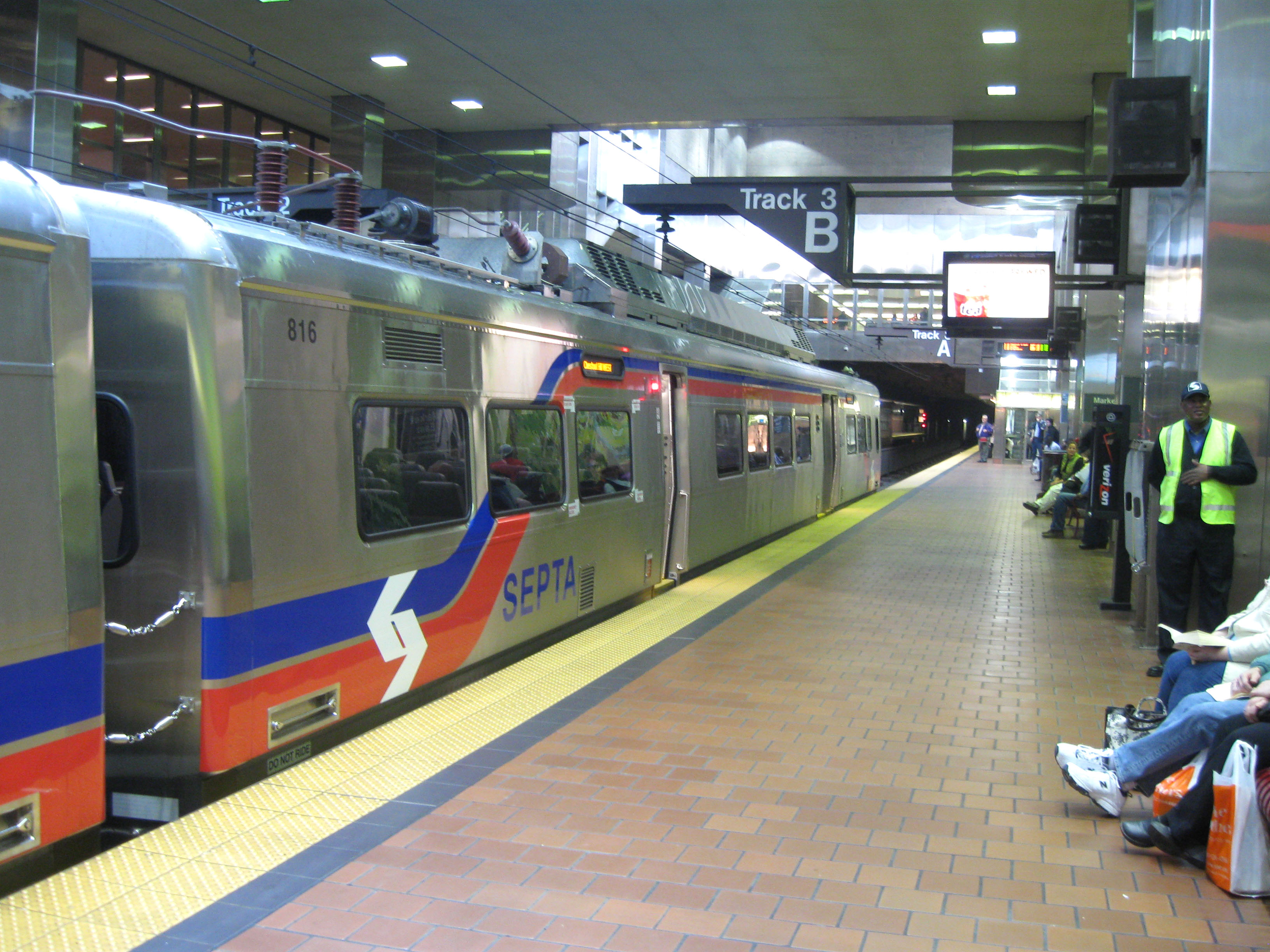
On Friday the 13th, the second day of the RCC convention, we took the train into Philadelphia from the Airport Marriott. After eating lunch at a rather crowded food court, we met at the National Constitution Center. Unfortunately, we only had 45 minutes to an hour to tour the  museum before the special museum program began. I would like to return with Cyndy, if not the rest of the family, to have time to explore the museums and sites of Philadelphia. Much has changed since traveling there with my family when I was a teenager.

I discussed my family’s trip to Pennsylvania in an earlier post. I also mentioned the trip our family took in 2010 from the Rock and Roll Hall of Fame in Cleveland, Ohio, through  Pennsylvania, and down to Washington, D.C. The special exhibit at the Hall of Fame that year was a Bruce Springsteen exhibit. Fast forward to the convention trip to the Constitution Center. I ate most of half of my sandwich (the “real” pastrami – as opposed to the turkey pastrami you get in Dallas – was a welcome treat) and wrapped up the remaining half in my bag.

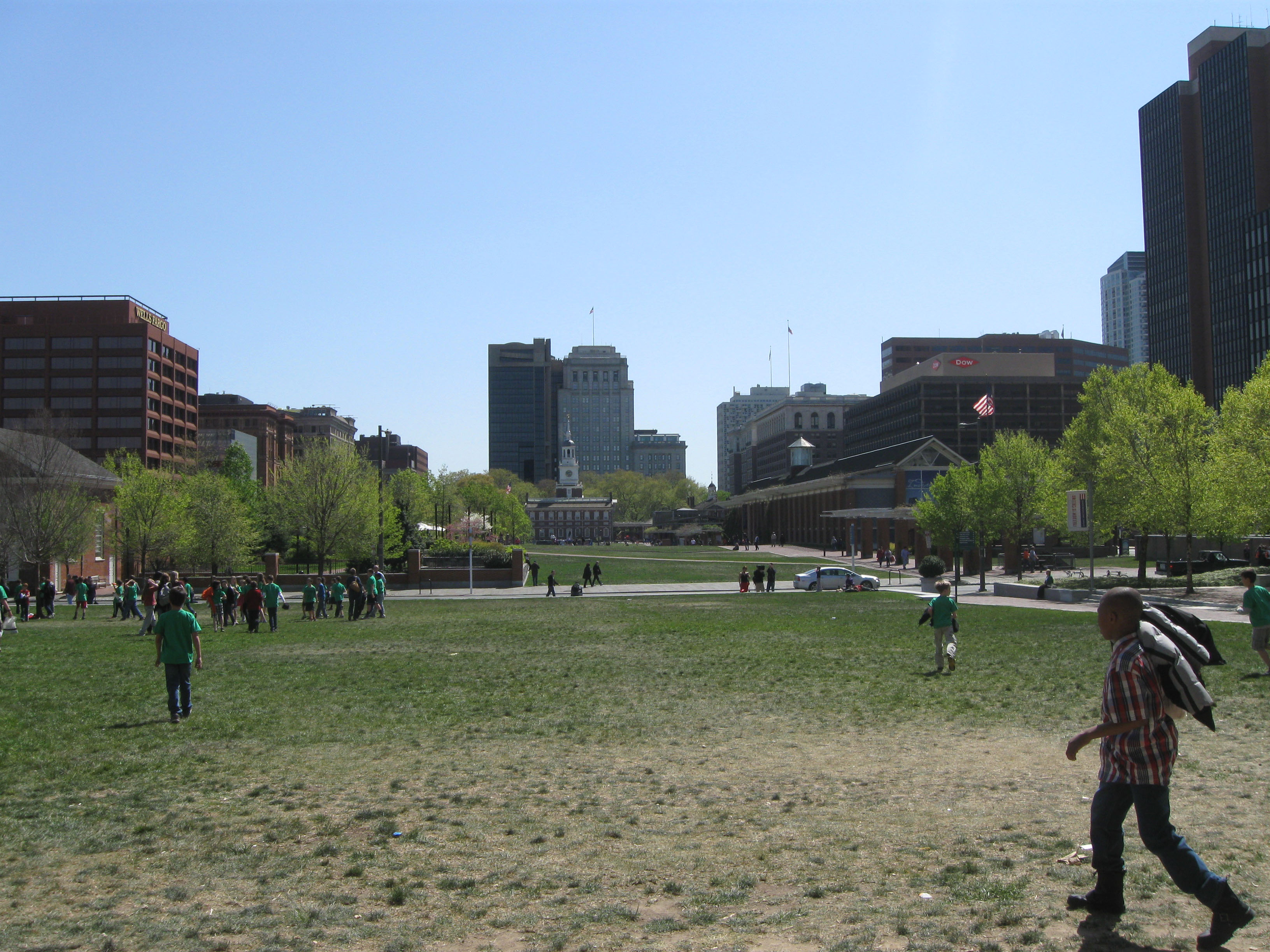
I wanted to get to the museum in order to have as much time to wander around the museum as possible. It is the 225th anniversary of the signing of the Constitution this year. I was walking through the mall taking pictures when I came close enough to clearly read the banner hanging above the entrance. There was a special exhibit at the time and it was – you guessed it – a Bruce Springsteen exhibit (it was, in fact, the same exhibit).

Now the Rock and Roll Hall of Fame I completely understand, but the National Constitution Center? Come to find out that they had put a different twist on the exhibit and were demonstrating Springsteen’s “use of music as a tool to express his First Amendment Rights.” Which makes sense. But here is the “kicker” as they say. The National Constitution Center is the first and only venue where the Springsteen exhibit is to travel from the Hall of Fame. What are the odds that I would be at both venues at the time of the exhibit?

The museum program, however, entitled “Freedom Rising” was very entertaining. The narrator stood in center of the circular theater swathed in lights and sound, with slides running around the upper part of the theater. The presentation told the story of the beginning of our country and government. Although the presentation was a little louder than absolutely necessary,  the narrator’s voice was uniquely appropriate for the material.

While I had little time to explore the museum, I did discover that the museum is remarkably interactive. Unfortunately, the crowds of school children and families made listening to the recordings difficult and required constant movement – leaving little time to absorb the information. But I certainly plan to make an effort to return and further explore the National Constitution Center and other fine museums in Philadelphia. Independence Hall and the Liberty Bell are a short walk from the NCC.

Back to the odds of my being at both displays of the Bruce Springsteen exhibit. I agree with Albert Einstein that “coincidence is God’s way of remaining anonymous.” But then there is the thought that everything happens for a reason. Sometimes, though, there just does not seem to be a reason.

So I put it to you – what do you think? Is there always a reason behind everything? When there does not seem to be a reason are we simply unable to discern it? Are there such things as coincidences and happenstance occurrences?

Peace be with you.

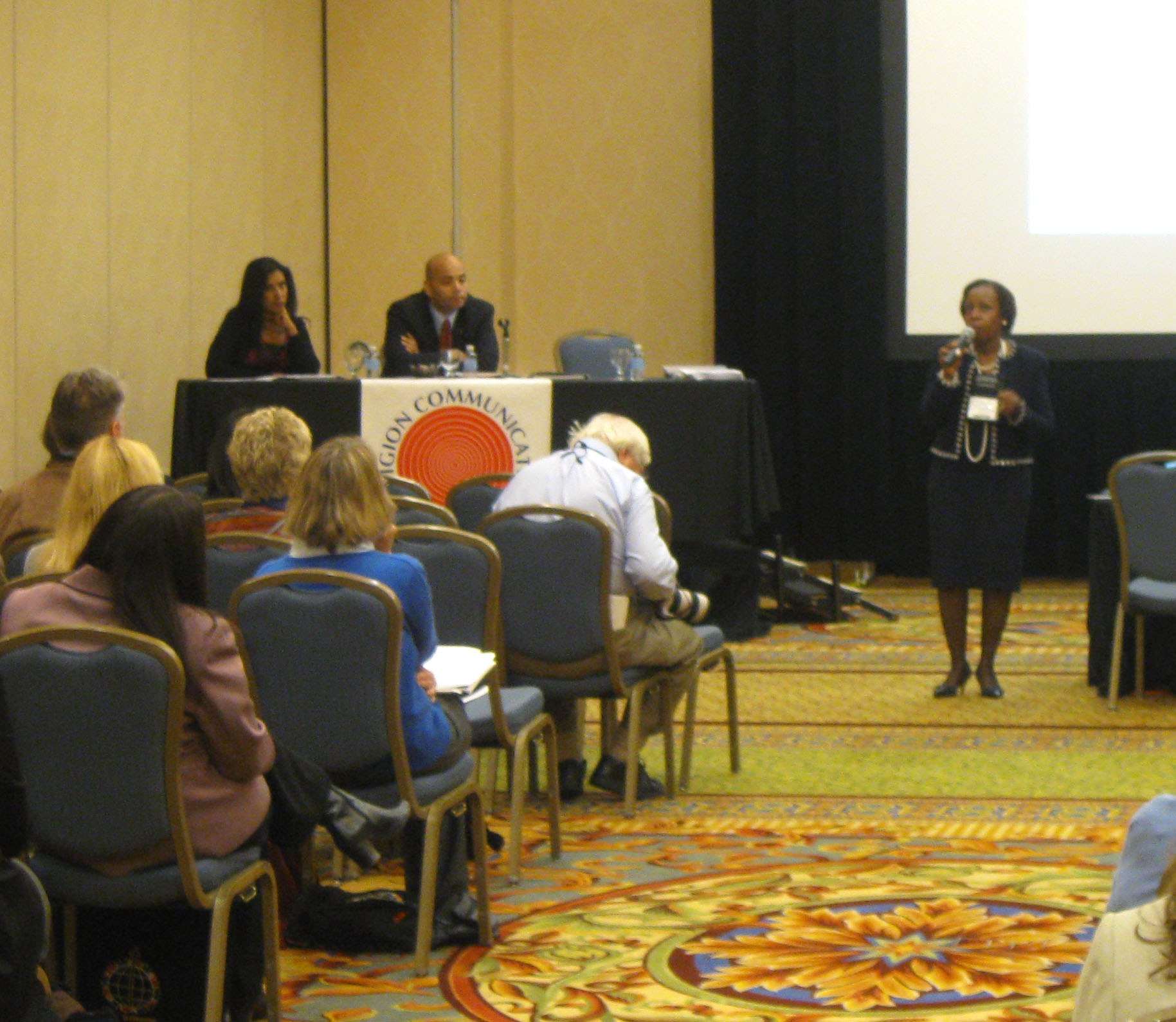
The full title of the opening plenary of the RCC national convention was “The Interdependence of Faith and Government Working for the Common Good.” The theme of the convention – being in Philadelphia and all – was “Interdependence: Religion Communication Today.” As I stated in my previous post, the plenary was scheduled to begin at 1:30 and I was walking down the stairs from the second floor skybridge to the lobby a few minutes later. Check-in at the hotel was not until 4 p.m., so, backpack and computer bag in hand – and on shoulder – I checked in to the convention and went in for the plenary.

Rev. Brenda Girton-Mitchell, director of the Faith-based and Neighborhood Partnerships Center at the Department of Education, moderated the panel of Directors of FBNP Centers. In addition to her work at the DOE, Girton-Mitchell also started a consulting firm to assist churches and nonprofits in advocacy, leadership development, and conflict resolution. The mission of the Center at the DOE is to promote student achievement by connecting schools and community-based organizations, both secular and faith-based.

The second panelist, Zeenat Rahman, acting director of the Center for Faith Based and Community Initiatives, U.S. Agency for International Development (USAID), is a regular contributor to the Chicago Tribune. She has also appeared in The Washington Post, National Public Radio, and CNN speaking on issues related to Muslim identity, civic engagement, and international affairs. Rahman is a Fellow with the American Muslim Civic Leaders Institute at the University of Southern California.

The third member of the panel was Eugene Schneeberg (rhymes with “neighbor”), director of the Center for FBNP for the U.S. Department of Justice. Under his leadership, the Center works to advance the goals of the President’s National Fatherhood & Mentoring Initiative, assists in the coordination of the National Forum on Youth Violence Prevention and serves on the Federal Interagency Reentry Council. Schneeberg, a graduate of Gordon Conwell Theological Seminary and Boston University, is passionate about his center’s initiatives.

The White House Office of FBNP works with centers at 13 federal agencies to form partnerships between government at all levels and nonprofit organizations, both secular and faith-based, to effectively serve Americans in need. The Center’s primary goals are to: Engage community-based organizations, both secular and faith-based, in building a culture of high expectations and support for education, Develop and support initiatives within the federal government to help maximize the education contributions of community-based organizations, including faith and interfaith organizations, and Strengthen partnerships between community-based organizations and schools to help improve the nation’s lowest-achieving schools.

The three directors were entertaining and informative, displaying their passion for the work their particular center does. Girton-Mitchell told the room of communicators that Directors of FBNP centers would be glad to make appearances similar to the panel discussion for the RCC convention to spread the word about their programs and initiatives if multiple presentations can be arranged to justify the travel expenses – which are limited. Each of the panelists introduced themselves and talked about the initiatives of their particular center, including the links contained in this post.

Peace be with you.

The Religion Communicators Council (RCC) National Convention was held this past Thursday through Saturday in Philadelphia at the Philadelphia Airport Marriot. While there was a showing of the movie, Waging Peace: Muslim and Christian Alternatives, on Wednesday evening for those who arrived early, the convention did not officially begin until the opening plenary at 1:30 on Thursday afternoon on “The In[ter]dependence of Faith and Government.” After the panel discussion, the attendees had a choice of four workshops.

My plane was scheduled to arrive at 1:20, so I knew I would be at least a few minutes late to the plenary. The hotel and the airport were connected by a skybridge just one terminal away from my arrival terminal, which helped, but it was still after 1:30 when I walked down the stairs to the lobby of the hotel. I will get back to the plenary and other convention activities in following posts.

The main event of the day was the DeRose-Hinkhouse Awards Dinner at 6:30 p.m. I am a member of RCC as a writer and representative of Christ UMC (Farmers Branch, Tx) and the communications committee. The church entered an article I had written for the church newspaper, and I entered this blog in the new Social Media category of the awards. When I was  informed that I won, I did not know which of the two was the winning entry. However, since I was winner, the church funded my trip to the convention.

As it turned out, I won a Certificate of Merit for Chasing After Wind. The .pdf of the awards program may be found here. Social Media is a new category, so it is at the end if you  happen to be looking for my award. In the picture you can see the slide they showed when they announced my award. The other picture is of the attendees from the DFW Chapter of the RCC. From left to right: Cherrie Graham (United Methodist Reporter), Debbie Tull (Patheos), myself, and Deb Christian (also UMR). Mary Jacobs, UMR reporter, was preparing for a writing workshop she was leading and was not available for the picture. Debbie and I both needed to catch our flights home.

The judging for the DeRose-Hinkhouse awards was done by “colleagues at Belmont University in Nashville, Tennessee.” All of the entrants received the judges’ evaluation forms after the awards program. Entrants not at the convention received their evaluations by mail.

Be that as it may, the judges had some suggestions for improving the blog. Ironically, my room was in a black hole of the hotel and I could not even boot up my computer – much less access my blog. So there will be changes to Chasing After Wind over the next week or so. Hopefully, the changes will make for a more pleasing visit to the blog, easier to comment, like, follow, and so forth, and there will be more interactive qualities.

Feel free to let me know of any suggestions or comments you may have pertaining to my blog. I try to respond to comments and visitors as soon as possible.

Peace be with you.

Have you ever wondered while watching NCIS, The Closer, or any of the CSI shows, whether actual investigative units can really do some of the things they do on TV?

Duane Boy will answer that question during his presentation at the King Of Glory Lutheran Church as part of their GUSTO! series of events. Boy will speak at 10 a.m. on Tuesday morning, April 10. (Normally held on the second Monday of each month, the meeting will be held on Tuesday due to the Easter weekend.) Boy, a retired DPD police detective, will walk the audience through the process of investigation, from conducting the initial interviews to presenting the case to the district attorney.

Boy, a long-time member of King of Glory, spent 33 years with the Dallas Police Department, retiring in 2011. During that time he handled such diverse cases as the 1991 Asian restaurant robberies, the SMU water-hazing case, and the gang arrest that cleared up 71 home invasion robberies, three kidnappings and the attempted murder of a police officer—not to mention the recovery of Elvis Presley’s motorcycle jacket, which had been stolen from Graceland.His investigation and arrest of a huge-scale counterfeit-music group earned him a Gold Record from the Recording Industry Association of America.

Boy is a South Dakota native, Vietnam veteran, and graduate of Oklahoma State University with a degree in entomology. He worked as a marine biologist at Texas Instruments until 1977, when he was sidelined with a broken neck. Interestingly, that led to his joining the Dallas Police Department a year later. He served as a patrol officer and undercover operator until 1988, when he became an investigator. He worked property crimes for a few years before moving to robbery cases.

Boy will touch on such steps as processing the crime scene, collecting evidence, developing and interviewing suspects, and compiling the case for prosecution. He’ll also cover what you can do to help an investigation if you are a victim and what you can do to lessen your chances of becoming a victim.

Come at 9:45 a.m. for coffee and conversation, and join us for a reception following the  presentation. The GUSTO! program was created to provide interesting and enlightening experiences for the mature adult community, but all are welcome.

Peace be with you.

David Sedeno

Dallas-Fort Worth RCC members, in lieu of the March meeting, are invited to attend one of three keynote sessions at “Communicating Through the Clutter”, a conference sponsored by UMR Communications. The presentations are planned to help you cut through the clutter and focus on some best practices for communicators

Choices are:

Finding Your Niche Markets Where They Live, led by David Sedeno, Executive Editor of the Texas Catholic at 12 noon on Thursday, March 22 at the Presbyterian Mission Center, 6100 Colwell Blvd, Irving, TX.

Jake Batsell

Converging Lanes of Communication, Jake Batsell, Assistant Professor of Journalism at SMU, 6:30 p.m. Thursday, March 22 at the Hyatt Place Hotel, 5455 Green Park Drive, Irving, TX

Is Print Green?, Joe Polanco, President of Printing and Imaging Association of Mid-America, 12:15 p.m. Friday, March 23 at the Presbyterian Mission Center, 6100 Colwell Blvd, Irving, TX.

Joe Polanco

RCC members and others interested can attend any one of the keynotes for $15 (payable at the event, check or cash) which includes the meal. Please email or call for reservations or more information, Deb Christian, dchristian@umr.org, 214.630.6495 x147 by Friday, March 16. More information about the UMR conference is available at www.umportal.org, choose Communicators Conference on the left.

If you want to attend the entire conference or other parts of it, let me know and we’ll work out some arrangement.

Deb Christian, Secretary, Dallas-Fort Worth Chapter RCC

—————-

Peace be with you.

Forty-four percent of residents in Dallas/Fort Worth are New Americans—foreign-born and their children. Over 1 million immigrants moved to the metroplex during the past 10 years. They came from Europe, Asia, South America, Africa and, of course, Mexico and other Latin American countries. They speak 239 languages, and in 32 percent of the region’s homes English is not the language spoken.

Dallas’s strength lies in its diversity, according to Anne Marie Weiss-Armush, who will speak to GUSTO! on Monday, March 12, at 10 a.m. Weiss-Armush is founder and president of DFW International Community Alliance, an umbrella organization for 1,600 internationally themed groups across North Texas. Her presentation will bring the metroplex’s demographics into focus and reveal where these New Americans live and work and how they contribute to the community.

Through its web site, DFW International offers hundreds of links to global organizations and artists plus a calendar of 500 global cultural events each month. The organization also sponsors the annual Dallas International Festival and other special events and produces yearly demographic reports that give insight into the new global face of North Texas.

A Fulbright scholar to Mexico, a Spanish teacher, and an author of four books on Middle Eastern culture, Weiss-Armush lived 11 years in Saudi Arabia, where she lectured on Arabic culture for the national media. Her 20 years of work on behalf of North Texas refugees and immigrant communities have earned her numerous awards, including that of Dallas Peacemaker of the Year for 2003.

For more information or to see what’s going on in Dallas/Fort Worth’s multicultural and ethnic communities, visit the organization’s extensive web site, dfwinternational.org.

Come for coffee and conversation at 9:45 a.m. Everyone is welcome. More information about GUSTO! is at www.kingofglory.com/GUSTO.

NOTE: The follow-on activity, a tour of Dallas’s ethnic communities, has been rescheduled for Monday, April 23. Sign-up for the tour will begin at the April 10 GUSTO! meeting.

Peace be with you.

In today’s tough economic climate where we all try to do more with less, it is sometimes difficult to know when, or if, to add more staff. We ask ourselves: Do I get more work first, then bring in extra workers to handle it or do I go ahead and bring in the workers so I can handle more work as I get it?

The Dallas-Fort Worth Chapter of the Religion Communicators Council has a program planned to provide some answers and insight, especially for our communication and faith-based needs. Abigail Allen, a senior account executive with Creative Circle will share ideas, suggestions and background for staffing. We’ll meet on Thursday, Feb. 23, 12 noon to 1:30 p.m. at Christ United Methodist Church.

Creative Circle is a specialized staffing agency representing advertising, creative, marketing, visual communication and interactive professionals. Ms. Allen has more than 12 years of experience in the advertising, creative and marketing industry. She works closely with companies, agencies and nonprofits in Dallas-Fort Worth to help identify top talent on both a freelance and full time basis. She has extensive experience in marketing communications, project management and business development.

Allen will introduce her company, explain how the process works, and give us examples, so we’ll be better prepared to work within our own organizations.

Cost is $15 and includes lunch. Please email or call Deb Christian, dchristian@umr.org, 214.630.6495 x147 to make a reservation.

——- From Deb Christian, Secretary, D-FW Chapter, RCC

Peace be with you.